"We were not 'governments' in 1492....We were kinship societies."

how-tribal-courts-deal-with-native-american-child-custody.jpg
This blog is based on a talk that Gabe Galanda gave at Harvard University's Kennedy School of Government, in conjunction with Harvard Project on American Indian Economic Development forum, "The Next Horizon," on May 1st. Gabe thanks Seattle City Councilwoman Debora Juarez, Dr. David Wilkins, and Professors Robert Williams, Matthew Fletcher, and Eric Eberhard for their teachings and research insights.
"The culture comes from the language." -- Darrell R. Kipp, Blackfeet

We were not “governments” in 1492. 

We were not “nations” in 1787. 

We were not “citizens” in 1823 or 1832.

We were kinship societies when Columbus arrived to Haiti, when the framers drafted the Constitution, and when Chief Justice John Marshall authored the Marshall Trilogy. 

We belonged to our societies as members, as in family members, not as citizens.

We were self-governing, but we were not governments.

“Native nations” and “tribal citizens” are racial formations, established by the colonizer under its processes—not ours.

Native nationhood was the mode by which Treaties and other laws could be forged to dispossess us of our lands—it was a mode of annihilation.

Native nationhood, to the extent exclusive of traditional kinship norms, remains a mode by which indigenous peoples will be extinguished.

If we continue to determine who belongs through use of racial formations, rather than through kinship rules, we will eventually be terminated.  Just look at the Trump Administration’s most recent treatment of tribes as a racial group for federal Medicaid reimbursement purposes.

Unless we return to the ways of kinship, we will eventually cease to exist.

Who were we?

Vine Deloria, Jr.’s auntie, Ella Deloria, said it best, writing from New York City in 1944:

All peoples who live communally must first find some way to get along together harmoniously and with a measure of decency and order.  This is a universal problem.  Each people, even the most primitive have solve it in its own way.  And that way, by whatever rules and controls it is achieved, is, for any people, the scheme of life that worked, The Dakota people of the past found a way: it was through kinship.

Kinship was the all-important matter.  Its demands and dictates for all phases of social life were relentless and exact . . . . By kinship all Dakota people were held together in a great relationship that was theoretically all-inclusive and co-extensive with the Dakota domain.  Everyone who was born a Dakota belonged in it; nobody need be left outside. . .

[T]he ultimate aim of Dakota life, stripped of accessories, was quite simple: One must obey kinship rules; one must be a good relative. . . . In the last analysis every other consideration was secondary—property, personal ambition, glory, good times, life itself. . .

[T]hose who kept the rules consistently and gladly, this honoring all their fellows, were good Dakotas—meaning good citizens of society, meaning persons of integrity and reliability.  And that was practically all the government there was.

“Speaking of Indians,” "Part II, 'A Scheme of Law That Worked,'" at pp. 25-32.

Illustrating the still pervasive universal nature of kinship and belonging at birth, as Ms. Deloria described, are Articles 9 and 22 of of the United Nations Declaration on the Rights of Indigenous Peoples, which provide respectively:

Indigenous peoples and individuals have the right to belong to an indigenous community or nation, in accordance with the traditions and customs of the community.

Indigenous peoples have the right to determine their own identity or membership in accordance with their customs and traditions.

Rather ironically, under the colonizer’s words governing its own citizens' belonging, citizenship is guaranteed, quite simply, to all who are born unto the land known today as the United States.  That bedrock American rule is established by the Constitution’s Fourteenth Amendment and affirmed by 5 U.S.C. 1402, titled “Nationals and citizens of United States at birth.”

Pre-conquest we, too, were inclusive peoples, who identified and governed according to very simple but exacting kinship rules.  But those ancient rules began to vanquish in the 19th Century.

How did we become "nations"?

In 1823, in Johnson v. McIntosh, U.S. Supreme Court Chief Justice John Marshall, immediately before declaring us “fierce savages,” observed: “When conquest is complete . . . the conquered inhabitants can be blended with the conquerors, or safely governed as a distinct peoples.”

By 1831, he “denominated” us “domestic dependent nations,” in Cherokee Nation v. Georgia.  Whether as "savages" or "dependent nations," these are racial formations from which modern Native nationhood has evolved. 

Exclaiming the United States' racial subjugation of indigenous peoples, the following year in Worcester v. Georgia, Justice Marshall explained:

The words ‘treaty’ and ‘nation' are words of our own language, selected in our diplomatic and legislative proceedings, by ourselves, having each a definite and well understood meaning.  We have applied them to Indians . . .

The “our” and “we” is the colonizer.  Words like “nation” were the colonizer’s—not ours.

Lest you have any doubt about that term, as applied to the then so-called Cherokee Nation in Worcester, consider Professor Rennard Strickland’s words in “Fire and Spirits”:

Englishmen were looking for Native versions of British courts and . . . concluded, in a supreme gesture of ethnocentrism, that the Cherokees had no system of law.

In truth, the Cherokee conception of law was simply different from the more traditional Western idea of law.  To the Cherokees law was the early representation of a divine spirit order. . .

The ongoing social process could not, in the Cherokee way, be manipulated by law to achieve policy goals.  There was no question of man being able to create law because to the Cherokee the norms of behavior were a sovereign command from the Spirit World.  Man might apply to the divinely ordained rules, but no earthly authority, was empowered to formulate rules of tribal conduct.

Indeed, treaties and positive law, including those establishing tribal “nationhood” and “government” in the 1800s, were then the colonizer’s words and ways—not ours.

As to Cherokee kinship and belonging, Professor Strickland offers these words:

Society is divided into separate classes and ranks which were created by the Spirits.  There is no significant stigma attached to class membership.  All classes, both men and women, are of great value socially and have important and useful roles in Cherokee society. . . .

Legal norms existed on four levels among ancient Cherokees. . . .

The first of the norms were those governing relationships between man and the supernatural—the Spirit Beings.  Second were the norms prescribing conduct of the individual Indian towards specific public order, issues relating to the entire village or tribe.  Next were the norms concerning clan rights and duties.  Finally, there were a limited number of norms on individual or personal questions.

In other words, kinship rules and norms pervaded, until the Marshall Trilogy took hold.

How did we cease self-rule by kinship?

Aided by the Marshall Trilogy's discovery doctrine and native nationhood model, Treaties and the General Allotment (Dawes) Act of 1887 were promulgated.  Each of those federal laws were intended to, and operated to, pulverize our kinship ties to multi-millions of acres of homelands. 

The Dawes Rolls, created by the U.S. in only six months and thus demonstrably incomplete and incorrect, were especially destructive to kinship.  Kinship societies-turned-tribes have since used those federal rolls as their so-called base rolls—as the foundation of who belongs, or doesn’t.

Then in 1934, the U.S. Congress passed the Indian Reorganization Act (IRA), deciding for tribes, who belongs to tribes, declaring Indians to be “members” if ½ degree or more of "blood quantum" and if in residence on reservations. 

Blood quantum is a racial fiction; one's human blood doesn't segregate mathematically.

Residence, although once a predominate form of kinship, took on a new meaning after arbitrary lines were drawn by the colonizer to concentrate Indian homelands onto reservations, in order to allow Manifest Destiny to flourish from coast to coast.

Now, 85 years later, the colonizer’s membership rules—and norms—indeed racism and classism—have supplanted kinship rules.  That is why we refer to ourselves as a race of “full bloods,” “half bloods,” and “mixed bloods”; and classes of “res Indians,” “off-res Indians,” and “urban Indians.”

Under the IRA, family members became political members of tribal constitutional governments and corporate entities, particularly under boilerplate constitutions and corporate charters foisted upon tribes by John Collier and his followers, including a nascent National Congress of American Indians.  Under those new tribal laws, tribal relatives can be “disenrolled” from the tribe. 

I have yet to discover an indigenous word that translates even close the word “disenrollment,” exclaiming the wholly foreign nature of that concept to us as indigenous peoples.

How did money over-rule kinship?

Dating back to the federal Lacey Act of 1906 and continuing through the Indian Gaming Regulatory Act (IGRA) of 1988, belonging has been increasingly individualized and monetized, through “pro rata” or “per capita” distributions of tribal communal wealth, by tribes to tribal members. That federally designed regime is also intended to pulverize us into oblivion. 

In fact, fueled by that new individual wealth, and corresponding graft and greed, 15% of today’s federally recognized tribes have disenrolled their kin.  In the case of the Elem Colony of Pomo Indians, tribal politicians are attempting to disenroll 100% of the tribe’s on-Colony population.  They are purportedly legislating themselves into oblivion. It is self-termination.

Addled by per capita greed, tribes are also imposing enrollment moratoria, meaning no longer enrolling or including their children among those who belong. 

Think about that for a minute. 

We talk, almost tritely, of the sustaining as indigenous peoples for sake of the Seven Generations.  Yet an increasing number of tribes are severing inter-generational kinship ties.  They are disowning their Fourth, Fifth, Sixth, and Seventh Generations.

In today's final analysis, kinship is secondary—to money. Venal exclusion has supplanted traditional inclusion.

Where do we go from here?

We cannot throw out the Native nationhood model.  Or abrogate Treaties, or IRA Constitutions or Bylaws.  Or abandon tribal capitalism via economic development. 

Tribes would be terminated without the modern nation-to-nation relationship; without Treaties as the Supreme Law of the Land per the U.S. Constitution; or without economic resources and the political power that accompanies those dollars.

Kinship, however, must be infused into Native nationhood, and throughout Native nation institutions as we know them today. 

In particular, we must use traditional kinship norms to define ourselves and our belonging.  That can mean maintaining the rubric and language of citizenship and IRA membership, if necessary.  

But we cannot self-define who belongs according to the Dawes Rolls or other federal censuses, or blood quantum, or colonial residential criteria, or gaming per capita checks.

We cannot allow racism, classism, individualism, nor capitalism to self-define us any longer.

We must re-define ourselves according to kinship rules.  We must re-define ourselves according to birthright.  We must re-define ourselves according to spiritual and cultural indigenous norms. 

If we do not, our nascent Native nations will rot from our core, until we eventually fall.

Gabriel S. Galanda is the managing lawyer of Galanda Broadman, PLLC, in Seattle. Gabe is a descendant of the Nomlaki and Concow Tribes, belonging to the Round Valley Indian Tribes of Northern California.  He can be reached at (206) 300-7801 or gabe@galandabroadman.com.


9th Circuit Says Jurors Needn’t Read Jailers’ Minds to Find Liability

download-1.jpg

By Ryan Dreveskracht

On Monday, the Ninth Circuit Court of Appeals made clear that jurors do not need to be mind-readers when it comes to determining whether adequate medical care was provided to pretrial detainees. In clarifying that these Fourteenth Amendment claims must be evaluated under an objective standard—as opposed to the Eighth Amendment’s subjective standard—the Court significantly eased the burden on § 1983 plaintiffs.

In Farmer v. Brennan, the U.S. Supreme Court held that under the Eighth Amendment's "cruel and unusual punishments" clause jail employees must "take reasonable measures to guarantee" an inmate's safety, which includes providing "adequate . . . medical care."  511 U.S. 825, 832 (1994).  The Court then articulated a two-prong inquiry for determining whether this standard is violated. 

First, the jury must consider whether a person is detained “under conditions posing a substantial risk of serious harm."  Id. at 834.  Second, the jailers who put the inmate in those conditions must both "know[] of" and purposefully disregard those conditions.    Id. at 837.  In other words, the jury must go into jailers' heads and determine (1) whether they actually believed the inmate was put at an increased risk of harm or death, and (2) whether the jailer made the conscious decision to keep the inmate in harm’s way despite that risk.  As the Court observed, under this test a jailer could escape liability under the second prong if he or she “knew the underlying facts but believed (albeit unsoundly) that the risk to which the facts gave rise was insubstantial or nonexistent.”  Id. at 844.  Or, alternatively, a jailer so aware would not be liable if he or she “responded reasonably to the risk, even if the harm ultimately was not averted.” Id.

Four years later, in Frost v. Agnos, the Ninth Circuit Court of Appeals held that "[b]ecause pretrial detainees' rights under the Fourteenth Amendment are comparable to prisoners' rights under the Eighth Amendment . . . we apply the same standards."  152 F.3d 1124, 1128 (9th Cir. 1998).  Other Courts of Appeal held likewise, refusing to "distinguish between Eighth and Fourteenth Amendment standards."  Funchess v. John Doe #1, No. 96-4767, 1997 WL 12785, at *2 (N.D. Ill. Jan. 10, 1997).  In other words, the law did not distinguish between convicted felons serving their sentence and pretrial detainees not convicted of anything—Farmer's subjective test applied to everyone.

Then, in 2015, the Supreme Court decided Kingsley v. Hendrickson, holding, in relevant part:

In deciding whether the force deliberately used [by the officer on the pretrial detainee] is, constitutionally speaking, “excessive,” should courts use an objective standard only, or instead a subjective standard that takes into account a defendant's state of mind?  It is with respect to this question that we hold that courts must use an objective standard.  In short, . . . a pretrial detainee must show only that the force purposely or knowingly used against him was objectively unreasonable.

135 S.Ct. 2466, 2472-73 (2015).  Since "a subjective standard will be more demanding, requiring the plaintiff to allege specific facts that shed light on the defendant's mental state, rather than more general notions of what should have been objectively clear," Kingsley's application of the objective test to Fourteenth Amendment excessive force cases was a huge step forward for civil rights plaintiffs.  Kedra v. Schroeter, 876 F.3d 424, 454 (3d Cir. 2017).

Shortly after Kingsley, in Castro v. County of Los Angeles, the Ninth Circuit held that Kingsley's Fourteenth Amendment objective test applied to "failure to protect" cases, as well as those where officers use excessive force.  833 F.3d 1060, 1070 (9th Cir. 2016).  As the Castro court explained:

Excessive force applied directly by an individual jailer and force applied by a fellow inmate can cause the same injuries, both physical and constitutional. Jailers have a duty to protect pretrial detainees from violence at the hands of other inmates, just as they have a duty to use only appropriate force themselves. . . . [T]here are significant reasons to hold that the objective standard applies to failure-to-protect claims as well.

What followed was an erratic series of rulings by district courts “on whether to extend the objective reasonableness standard of review set forth in Kingsley to cases of pretrial detainees that do not involve the use of excessive force (i.e., cases challenging medical treatment . . . ).”  Castillo v. Dubose, No. 14-0987, 2017 WL 3765772, at *6 (M.D. Ala. Jul. 31, 2017) (quotation omitted).  In the Ninth Circuit, district courts that addressed Kingsley's objective standard applied it with hesitancy, holding, for example, that "factual allegations are sufficient under either standard."  Williams v. Cty., No. 15-1760, 2016 WL 4745179, at *6 (D. Or. Sept. 12, 2016); see also Bremer v. Cty. of Contra Costa, No. 15-1895, 2016 WL 6822011, at *6 (N.D. Cal. Nov. 18, 2016) ("The Court need not decide whether the subjective or objective standard applies here as no reasonable jury could find the Individual Defendants were deliberately indifferent under either standard.").  Defendants, of course, continued to argue that a subjective standard should be applied in all but excessive force and failure-to-protect cases, while inmates and the families of deceased inmates argued that the less-demanding objective standard applied.

Then, on Monday, the Ninth Circuit Court of Appeals issued an order that provided clarity once and for all.  In Gordon v. Cty. of Orange the court expressly held that that "claims for violations of the right to adequate medical care brought by pretrial detainees against individual defendants under the Fourteenth Amendment must be evaluated under an objective deliberate indifference standard."  No. 16-56005, 2018 WL 1998296, at *5 (9th Cir. Apr. 30, 2018). 

Gordon leaves jurors no longer needing to read jailers’ minds in order to find them liable for failure to render medical care to inmates.

Ryan Dreveskracht is an attorney with Galanda Broadman, PLLC, in Seattle.  His practice includes civil rights litigation against jails and prisons for their unlawful treatment of inmates.  He can be reached at (206) 909-3842 or ryan@galandabroadman.com.

Gabe Galanda to Talk Tribal Kinship At Harvard University

From Ella Deloria's Speaking of Indians (1944)

From Ella Deloria's Speaking of Indians (1944)

Next week, Gabe Galanda will deliver an Insight Blast titled, "Re-Imagining Tribal Citizenship," at Harvard University. 

Gabe will discuss the acute need for indigenous peoples to infuse historic tribal kinship values into modern modes and institutions of self-governance, particularly in regard to belonging.

Gabe's talk will occur at the John F. Kennedy School of Government on May 1, in conjunction with a Harvard Project on American Indian Economic Development forum: "The Next Horizon." 

The invite-only forum "will bring together the leaders, the innovators, the thinkers, and the decision makers who are fighting to make Indigenous sovereignty and self-determination realities. The peer-to-peer events of the gathering will help chart the path forward."

Gabriel S. Galanda is the managing lawyer of Galanda Broadman, PLLC, in Seattle. Gabe is a descendant of the Nomlaki and Concow Tribes, belonging to the Round Valley Indian Tribes of Northern California.  He can be reached at (206) 300-7801 or gabe@galandabroadman.com.

Gabe Galanda To Keynote American Indian Law Journal Banquet: "Keeping it Real: Indian Lawyers & Indian Law Scholarship”

ailj.jpg

Gabe Galanda will be the Keynote Speaker at the American Indian Law Journal's End-of-the-Year Banquet on Friday, April 27th at Seattle University School of Law. Gabe's speech is titled, "Keeping it Real: Indian Lawyers & Indian Law Scholarship.”  He will discuss the growing need for Indian lawyering and scholarship that are rooted in tribal values, morals and ethics.

Gabriel S. Galanda is the managing lawyer of Galanda Broadman, PLLC, in Seattle. Gabe is a descendant of the Nomlaki and Concow Tribes, belonging to the Round Valley Indian Tribes of Northern California.  He can be reached at (206) 300-7801 or gabe@galandabroadman.com.

Dreveskracht, Galanda Publish ABA "Tribal Court Litigation" Deskbook Chapter

DacgSm4VAAAksN2.jpg

The American Bar Association Business Law Section just published the 2018 edition of Annual Review of Developments in Business and Corporate Litigation, which includes a 58-page Tribal Court Litigation chapter co-authored by Indian litigators Ryan Dreveskracht and Gabe Galanda of Galanda Broadman.  An excerpt from the introduction:

“Indian law”—a body of tribal and federal law predominately—is the foundation for every transaction arising in or from Indian Country. Almost every arena of commercial practice now intersects with Indian law, including tax, finance, merger and acquisition, sales, secured transactions, antitrust, debt collection, real estate, environmental, energy, land use, employment, and litigation. Therefore, virtually every business lawyer or litigator needs to have some working knowledge of Indian law. This chapter seeks to provide that basic understanding.

Gabe served as the Editor-in-Chief of Annual Review for the 2007 through 2010 editions, and has co-authored the chapter each year since 2006. This is Ryan’s seventh year co-authoring the chapter.  They collaborated on the 2018 edition of the chapter with Grant Christensen, associate professor at the University of North Dakota School of Law, and Heidi McNeil Staudenmaier, a senior partner with Snell & Wilmer LLP.

Joe Sexton, Yakama Nation Present to Society for American Archaeology Re: Kennewick Man

Image uploaded from iOS (4).jpg

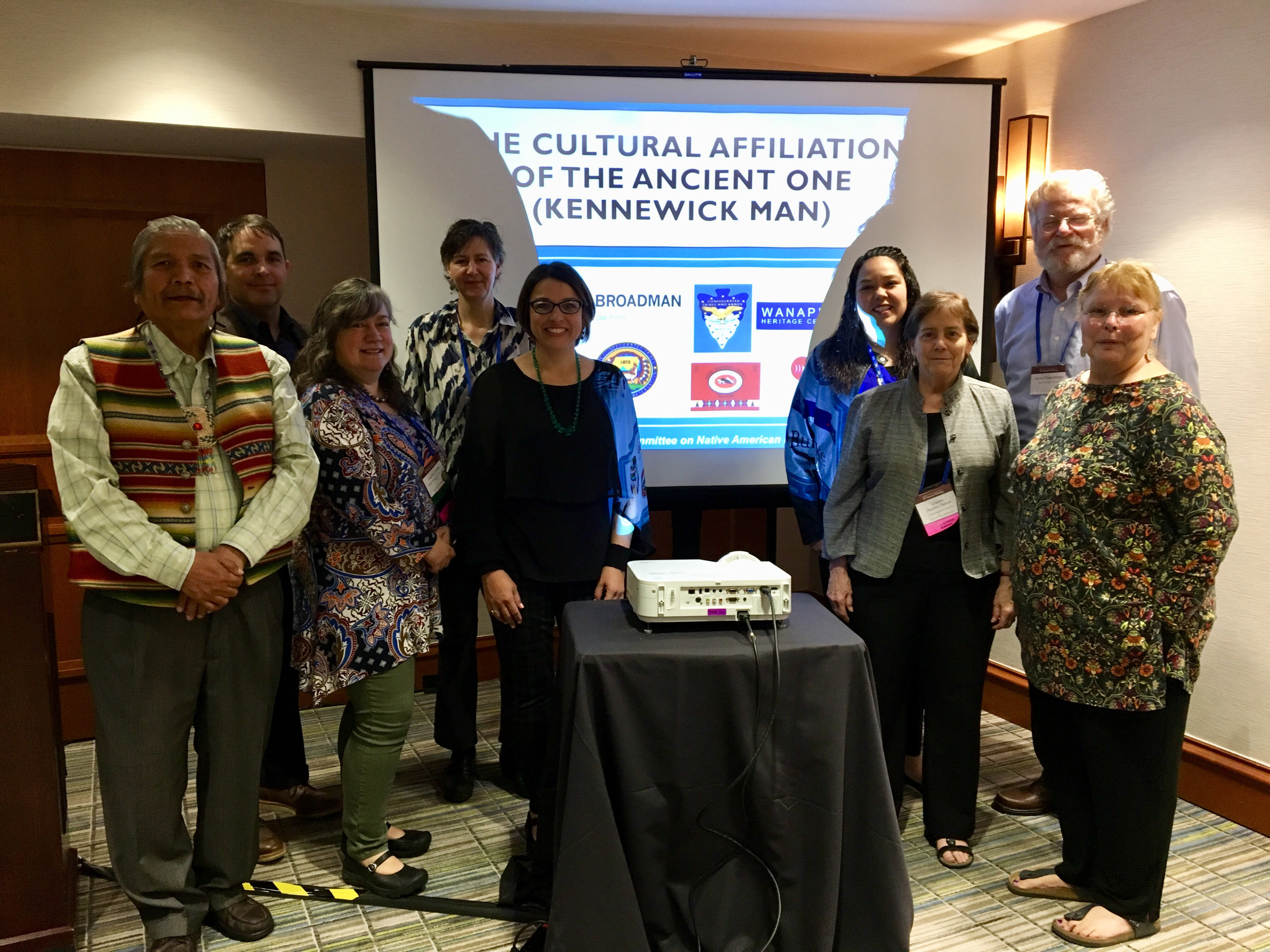
On Saturday, Joe Sextion presented, along with Yakama Nation Leadership, at the Society for American Archaeology's 83rd Annual Meeting in Washington, DC, regarding: "The Cultural Affiliation of the Ancient One (Kennewick Man)." According to the program description:

The Colville, Nez Perce, Umatilla, Wanapum, and Yakama utilized NAGPRA’s preponderance of evidence standard to demonstrate a relationship of shared group identity with the Ancient One. The tribe’s proactive approach with collaborative partners overcame the hegemonic ideology of a federal agency to repatriate the Ancient One for his final journey to the Creator. For over twenty years, the Claimant Tribes asserted their cultural affiliation. Our purpose here is to illustrate that, although he was repatriated under the WIIN Act of 2016, there does exist evidence of a shared group identity based upon all available, population specific data for the Columbia Plateau. This information provided the evidentiary basis for the identification of an earlier group and cultural affiliation to the Claimant Tribes. The Ancient One falls within the variability exhibited at the same time period and throughout time on the Columbia Plateau. He was not outside of the norm for the population existing during the Early Cascade period and for the populations that followed for which he has a shared group identity. The Claimant Tribes are in fact culturally affiliated to the Ancient One and have never signed anything that legally says they are not.

Image uploaded from iOS (3).jpg

Joe Sexton is Of Counsel with Galanda Broadman, PLLC.  Joe’s practice focuses on tribal sovereignty issues, including complex land and environmental issues, and economic development matters.  He can be reached at (509) 910-8842 and joe@galandbroadman.com.

Bree Black Horse Elected to National Native Bar Association Board

nnaba-logo.jpg

At its Annual Meeting on April 4th in Scottsdale, Arizona, the National Native American Bar Association (NNABA) elected Bree Black Horse to its Board of Directors.  Bree will serve a two-year term as an at-large member of the Board.

Bree, at center, with Lloyd Miller, Heather Kendall-Miller, Gabe Galanda and Eric Eberhard, at the FBA Annual Indian Law Conference in Scottsdale on April 4

Bree, at center, with Lloyd Miller, Heather Kendall-Miller, Gabe Galanda and Eric Eberhard, at the FBA Annual Indian Law Conference in Scottsdale on April 4

Bree is an associate in the Seattle office of Galanda Broadman and an enrolled member of the Seminole Nation of Oklahoma.  Her practice focuses on defending individuals’ civil rights in federal, state and tribal courts. She can be reached at (206) 735-0448 or bree@galandabroadman.com.

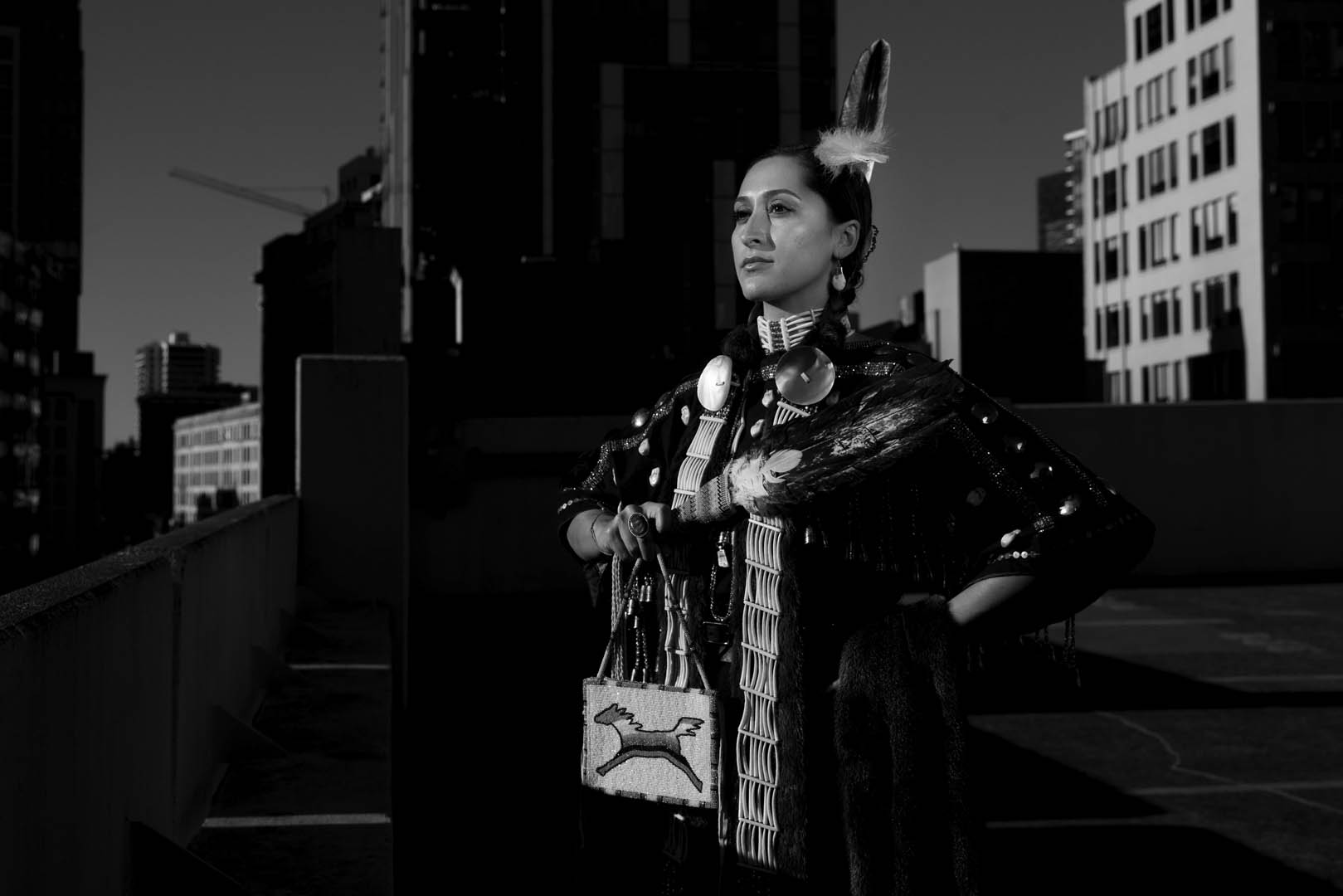
Bree Black Horse Featured in Seattle Times #MeToo Story: "Us Too"

black_horse_Schultz.jpg

Bree Black Horse is featured in a Seattle Times Pacific NW Magazine story (here) regarding "the different ways women from minority and marginalized populations connect with the #MeToo movement’s outpouring of stories about sexual harassment and violence."

Described as "a rising Native American attorney in Seattle" and "a legal advocate for indigenous women at the law firm Galanda Broadman," Bree explains the "crisis of domestic violence and sexual assault against women in Indian country."

Black Horse points out that while over two-thirds of violence against indigenous women happens at the hands of nonnative men, it has been difficult for tribal courts to prosecute nonnative people accused of assault on reservation land.
She’s pushing for greater attention to the disappearance and killing of indigenous women, including Muckleshoot tribal member Renee Davis, who was fatally shot by King County deputies in 2016. Davis was pregnant at the time.
She says it’s also important for indigenous communities to address the other sad fact that indigenous men are responsible for a significant portion of harassment and violence against native women.

Bree's "been talking to her mom a lot about the traditional importance of women within families as well as in tribal ceremonial functions, and how that high esteem has been eroded by European influence."

Black Horse wants to retrieve what has been lost.
“I think it’s time for us to come together as a people and return to those traditional values,” she says. “I want us to remember who we are.”

Bree is an associate in the Seattle office of Galanda Broadman and an enrolled member of the Seminole Nation of Oklahoma.  Her practice focuses on defending individuals’ civil rights in federal, state and tribal courts. She can be reached at (206) 735-0448 or bree@galandabroadman.com.

Gabe Galanda to Talk Lawyer Ethics/Disenrollment at NNABA Annual Meeting

Event-Marketing-Snake-Oil.jpg

On Wednesday, April 4, 2017, at the National Native American Bar Association's (NNABA) Annual Meeting, which is being held in conjunction with the Federal Bar Association's 2018 Indian Law Conference, Gabe Galanda will deliver the "Update on NNABA Formal Ethics Opinion No. 1: 'Ensuring Due Process For All Native Americans Targeted For Disenrollment.'"

NNABA adopted Formal Ethics Opinion No. 1 in 2015 in reaction to the tribal disenrollment epidemic and, in particular, "to remind lawyers and any bar associations to which they belong that lawyers’ ethical obligations to their licensing jurisdictions do not stop at reservation boundaries."

Disenrollment scholars have cited lawyer involvement in disenrollment crusades, and the resulting void in due process at law, as a contributing cause of the epidemic.  As Dr. David Wilkins wrote in his seminal book, Dismembered: Native Disenrollment and the Battle for Human Rights:

Certain recurrent themes became evident in the course of examining these and other [disenrollments, including] the powerful role played by lawyers who work for tribal governments....
Lawyers were cited several times as being the culprits in crafting disenrollment policies, revising enrollment procedures to make it easier to disenroll, and in pursuing lawsuits that enrich law firm coffers while financially crippling those facing disenrollment.

Although disenrollment seems to be waning nationally, thanks in significant part to NNABA's ethics position according to Dr. Wilkins, the unethical lawyer dynamics that he identifies, persist in certain ongoing disenrollment sagas and in other tribal contexts.

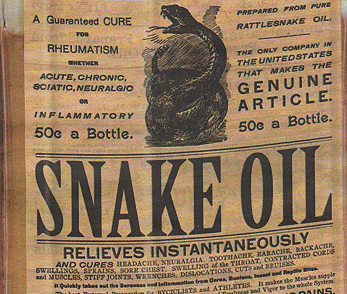
Lawyers, especially Big Law attorneys, continue to draft tribal resolutions and ordinances that deny due process to disenrollees (here, for example); and to cause "the tribe" to otherwise violate indigenous human rights. Those lawyers, including Native attorneys, forsake their ethics and morals in order to "save the tribal client" and the lucrative billable hours--and salaries and bonuses--that comes with tribes as clients. Those lawyers give dishonest--even illegal--advice, rather than difficult, ethical advice. Those lawyers sell snake oil to the tribal client.

And those shady lawyer dynamics are not unique to disenrollment. They exist in "intra-tribal" leadership disputes, too.  There, the lawyers count votes on Tribal Council or otherwise handicap which faction will win; place their bets on that faction; and then aid and abet that's faction illegality. Because that faction controls the tribal treasury, the lawyers' bets generally don't fail.

With state bar disciplinary bodies still finding their way in Indian Country, this unethical lawyering occurs way too frequently within tribal communities. But with the likes of NNABA shining a bright light on such lawyer malfeasance, there is hope that those lawyers will eventually be rooted out.

Gabriel S. Galanda is the managing lawyer of Galanda Broadman, PLLC, in Seattle. Gabe is a descendant of the Nomlaki and Concow Tribes, belonging to the Round Valley Indian Tribes of Northern California.  He can be reached at (206) 300-7801 or gabe@galandabroadman.com.

How Doth Bob Kelly Disenroll Thee? Let Me Count the Stays

Screen Shot 2016-10-13 at 9.12.39 AM.png

Bob Kelly has written the Nooksack 306, announcing that the interim "Tribal Council officially removed your name from the roll book of currently enrolled members of the Nooksack Indian Tribe." 

The 306 have been "officially" disenrolled, without any notice or due process whatsoever.

This time there wasn't even a 1-800 disenrollment hotline to call.  

The 306 can now only seek "reconsideration."  Fait accompli.

Kelly cites a recently "ratified and reaffirmed" council resolution from 2016, which was, and remains, invalidated by the United States. 

With grand delusion, he also cites "the movement against the concept of disenrollment to turn the Tribal Court system into a constitutional court"--in other words, the cries of indigenous peoples for normative due process and equal protection at law.  Huh? 

Anyway, a federally invalidated tribal council resolution cannot be tribally "ratified and reaffirmed," especially by an interim council that lacks a constitutional quorum.

Crucially, the Kelly Faction stands in further violation of each of the following ten federal administrative stays and related Tribal Court and Court of Appeals injunctions.  It is hard to fathom how anybody could be more enjoined than the Kelly Faction at the moment. 

  • St. Germain v. Acting N.W. Reg’l Dir., 17 IBIA No.16-022 (Bd. of Indian App. 2016) (Appealing “whether the Superintendent and Regional Director approved the Tribe’s proposed amend to Title 63 in accordance with the administrative rules, procedures, and laws that direct BIA decision making.”); 

  • 43 C.F.R. § 4.314(a) (2004) (“No decision of an administrative law judge, Indian probate judge, or BIA official that at the time of its rendition is subject to appeal to the Board, will be considered final . . . .”); 

  • 25 C.F.R. § 2.6(a) (1989) (“No decision, which at the time of its rendition is subject to appeal to a superior authority in the Department, shall be considered final . . . .”); 

  • 25 C.F.R. § 2.6(b) (1989) (“Decisions made by officials of the Bureau of Indian Affairs shall be effective when the time for filing a notice of appeal has expired and no notice of appeal has been filed.”); 

  • Order at 2, Michelle Roberts, et al., v. Robert Kelly, et al., No. 2013-CI-CL-003 and Belmont, et al, v. Kelly, et al., No. 2014-CI-CL-007, (Nooksack Tribal Ct. Feb. 26, 2015) ("the Parties shall maintain the status quo . . . until a decision approving Title 63 becomes final for the Department of the Interior pursuant to 25 C.F.R. § 2.6."); 

  • Opinion at 9, Michelle Roberts, et al., v. Robert Kelly, et al., No. 2013- CI-CL-003 (Nooksack Tribal App. Ct. Mar. 18, 2014) (“[T]hese procedures were not properly adopted in accordance with the strict requirements of the Nooksack Constitution, and any procedural rules governing disenrollment proceedings must be adopted by ordinance and the ordinance approved by the Secretary of the Interior as provided for in the Nooksack Constitution.”); 

  • Decision and Order Granting Plaintiffs’ Motion for Preliminary Injunction, Belmont et al, v. Kelly, et al., No. 214-CI-CL-007 (Nooksack Tribal Ct. June 12, 2014) (granting Plaintiff’s motion for preliminary injunction holding “[t]his approach appears to be an attempt to circumvent the very clear holdings of the Court of Appeals that disenrollment procedures . . . must be approved by the Secretary of the Interior . . . .”); 

  • Order Enjoining Disenrollment Proceedings, Michelle Roberts, et al., v. Robert Kelly, et al., No. 2013-CI-CL-003 (Nooksack Tribal Ct. Mar. 31, 2014) (Court “hereby issues a permanent injunction against the Defendants enjoining them from undertaking disenrollment proceedings . . . .”); 

  • Second Order Granting Request to Join April 15, 2016, Motion and Be Subject to June 28, 2016, Order, Belmont, et al, v. Kelly, et al., No. 2014-CI-CL-007 (Nooksack Tribal App. Ct. Sept. 28, 2016) (order granting Formal Indications to 127 more plaintiffs regarding Nooksack Tribal Court June 28, Order); and 

  • Order Granting Requests to Join April 15, 2016, Motion and Be Subject to June 28, 2016, Order, Belmont, et al, v. Kelly, et al., No. 2014-CI-CL-007 (Nooksack Tribal App. Ct. Sept. 21, 2016) (order granting Formal Indications to 17 plaintiffs regarding Nooksack Tribal Court June 28, 2016 Order). 

The 306 could also seek contempt of court from the Nooksack Tribal Court.  But with fake judge Ray Dodge still holding his finger down on the scales of justice in Deming, that isn't an option.

Still, the 306 belong, and intend to stay right where they belong: at Nooksack and in Deming.

Gabriel S. Galanda is the managing lawyer of Galanda Broadman, PLLC, in Seattle. Gabe is a descendant of the Nomlaki and Concow Tribes, belonging to the Round Valley Indian Tribes of Northern California.  He can be reached at (206) 300-7801 or gabe@galandabroadman.com.