Exposing Abramoff's Playbook: Play #2

Here's part two of my blog series.  Part one is here.  While reading this one, consider Senator John McCain's most recent criticism of the NIGC, saying he "doesn’t believe the NIGC is doing enough to regulate the industry.”  He appears to have a point. Play #2—Seize the Palace.  Concurrent with the eruption of the Tribal leadership dispute, the bad guys immediately exert control over the Tribe’s casino and other cash-generating enterprises—by violent force if necessary.
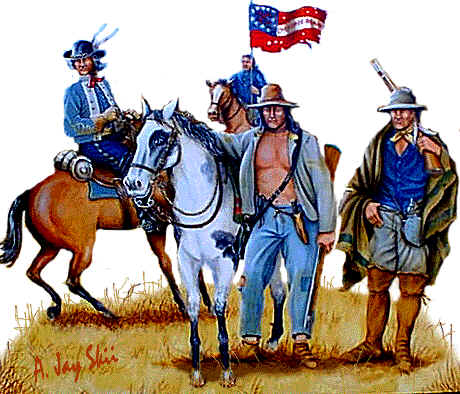
braves

The bad guys know that in a war of attrition, a war chest is required—and there is no deeper war chest than replenishing Indian casino coffers.  They seize the gaming money to pay themselves and to recruit an army of others. 

Recall the following emails from Abramoff to his colleagues:  "I want all their MONEY!!!" “We're charging these guys up the wazoo . . . Make sure you bill your hours like a demon.”  This is precisely the state of mind of the bad guy-lawyers, who are sure to extract an enormous retainer up front so that they get paid no matter what ultimately happens to the Tribe.

The bad guys then deny gaming per capita payments to their opponents to prevent them from accumulating any war chest of their own, while increasing those payments to other Tribal members to attract them as allies.  Per capita monies are especially leveraged to buy votes in Tribal Council elections, or recall or initiative drives.  All of this is done in disregard of any Tribal revenue allocation plan and the Indian Gaming Regulatory Act.  (See also "Tribal Per Capitas and Self-Termination.")

Because what the bad guys really know is that the National Indian Gaming Commission Chairman will largely sit on the sidelines until the inert BIA decision-making process finally runs its course, and that in the meantime the NIGC will not take any meaningful steps to shut down an illegal gaming operation or otherwise stem illegality.  Recall that in Bay Mills the states argued that the “Commission only rarely invokes its authority to enforce the law against Indian tribes.”  The states appear to be right.  As we also saw in Bay Mills, the entire U.S. Department of Justice—from local U.S. Attorneys and FBI Special Agents,  to everyone at Main Justice—sits idle too, despite its clear statutory criminal and civil authority to intervene.  Indian Country could use Phil Hogen and Tom Perrelli right about now.

All the while,  the bad guys run roughshod over the Tribe’s entire gaming operation.  This increasingly includes heavily armed “security” personnel surrounding the casino, paid with gaming monies and tasked to by any means necessary, prevent legitimate Tribal officials from resuming control over the casino.

Stay tuned for further blogs exposing several other schemes from Abramoff's Playbook.

Gabriel “Gabe” Galanda is the Managing Partner at Galanda Broadman. He is a citizen of the Round Valley Indian Tribes. Gabe can be reached at 206.300.7801 or gabe@galandabroadman.com.

Exposing Abramoff’s Playbook: Play #1

As the number of cash-fueled tribal civil wars in Indian Country only increases--here and here are two illustrative headlines in just this past week--I reprise my exposition of "Abramoff's Playbook" from earlier this summer through a series of blogs. ("Exposing Abramoff's Playbook" will also soon re-run in its entirety, via Indian Country Today Media Network.)

"We do a recall, election and take over.  Let's discuss." – Jack Abramoff, February 14, 2002

In professional sports “the playbook is a sacred hardbound diary of trust.  It's an accumulation of decades' worth of knowledge, tweaked and perfected, sectioned off by scribbles and colored tabs.”

Looming large in Indian Country right now, there’s another kind of playbook; a dark one.  The plays were originally designed by Jack Abramoff during his infamous stint at Ysleta Del Sur, Coushatta and Saginaw Chippewa.  For the last two decades, Casino Jack’s playbook has been enhanced with the knowledge of other lawyers, lobbyists and executives, especially those in the Indian gaming industry.   Even Native lawyers are now picking up and deploying the playbook. 

abramoff-headress-dollar-thumb-249x300

The plays are shrewdly designed to divide and conquer Tribal Councils and communities from within, while federal trustees stand on the sidelines.  The first few plays are as scripted as an NFL team’s opening drive.

Play #1—Create a Tribal Leadership Dispute.  Whether through “recall, election and takeover,” or some form of Tribal Chairman fiat or General Council coup d’état and resulting insurrection, the Abramoffs of the world—the bad guys—know that if Tribal governmental factions can be created, it will paralyze all interested parties, including all levels of federal government, tribal and state law enforcement, and financial institutions. In turn, those pivotal players will not immediately know who to treat as the “rightful Tribal Council” for purposes of government-to-government relations, law and order, or financial security.

The bad guys will begin their takeover by setting their sights on weak persons or institutions in the Tribe, and then exploiting those weaknesses to drive a deep wedge into the heart of the community.  They will tap, even bribe, a weak Chairman, or a group of dissident members, or notoriously unethical Tribal officers or employees.  P.L. 280 jurisdictions are particularly vulnerable to such organized crime given perennial inter-agency law enforcement indecision and inaction.

In the face of a takeover, the United States must “recognize the last undisputed officials” as tribal officials—meaning the officials in office immediately before the leadership dispute was manufactured—for government-to-government purposes, until the dispute can be settled pursuant to tribal law and procedure.  Alturas Indian Rancheria v. Acting Pacific Regional Director, 54 IBIA 1, 8 (2011).  But the bad guys know that the Bureau of Indian Affairs will be slow to make that declaration.

The bad guys also know that if the BIA does ever declare the Tribe’s last undisputed officials as rightful leadership, they can immediately appeal any decision that goes against them and stay its effect for up to three years, given the current backlog at the Interior Board of Indian Appeals.  25 C.F.R. 2.6(b).  While the appeal lumbers along, and the bad guys declare that the decision has no effect pending that appeal, they mount a concerted war of attrition against anybody who stands in their way.

Stay tuned for more blogs exposing several other schemes from Abramoff's Playbook.

Gabriel “Gabe” Galanda is the Managing Partner at Galanda Broadman. He is a citizen of the Round Valley Indian Tribes. Gabe can be reached at 206.300.7801 or gabe@galandabroadman.com.

Blood Money: Bank of America & the Redskins

Bank of America is the "exclusive sponsor" of the Washington Redskins.  Bank of America is also an exclusive lender--in fact, the leading lender--the $28 billion Indian gaming industry. redskins_logo

BofA has paid millions of dollars to Dan Snyder to serve as the "Official Bank of the Washington Redskins."  BofA has received many millions more from Indian Country in gaming deals. BofA is so very content to have it both ways, remaining on the sidelines of the Redskins mascot debate.

wDW9-813Xp4FiycQbD-FyT1oBJOYgw-6xdVahDuUGR0

Indian Country now balks at Nike and FedEx's Redskins sponsorships. But the hundreds of tribes that bank with BofA, and that collectively tout billions of dollars in purchasing power, speak little of BofA's own use of the Redskins mascot or unholy alliance with Dan Snyder.

Simply put, cash is king.  Indeed, while Indian Country scorns Snyder's Original Americans Foundation and rejects his blood money, tribes accept donations from Nike's N7 Fund and tribal casinos continue to do mega business with BofA.  It's all shades of grey, or green.

This status quo will prevail until the money fleets from BofA, Nike and FedEx, the NFL, and in turn Dan Snyder. Maybe Indian gaming money will be the first to go.  Maybe not.  But only when the money goes, will the name change.

Gabriel “Gabe” Galanda is the Managing Partner at Galanda Broadman. He is a citizen of the Round Valley Indian Tribes. Gabe can be reached at 206.300.7801 or gabe@galandabroadman.com.

Gabe Galanda Teaches "How to Structure Your Native Business"

Today Gabe Galanda delivered a webinar for the U.S. Department of the Interior's Office of Indian Energy and Economic Development, titled, "How to Structure Your Native Business." Here are his slides. EexvUyp2j6OIkdbiJh8zsQ7TGFxBbtUFtfvXpkHYyhY

Gabriel “Gabe” Galanda is the Managing Partner at Galanda Broadman. He is a citizen of the Round Valley Indian Tribes. Gabe can be reached at 206.300.7801 or gabe@galandabroadman.com.

Anthony Broadman Supreme Court Amicus Counsel In Local Fight Against Sex Trafficking

We are proud to serve as local amicus counsel on behalf of the Coalition Against Trafficking In Women (CATW) in the Washington Supreme Court matter J.S., S.L., & L.C. v. Village Voice Media Holdings, L.L.C.  The brief is available here. imgres

Since Craigslist removed its “Adult Services” sections, backpage.com, a U.S. based corporation owned by Village Voice Media Holdings LLC, has become traffickers' website of choice.  CATW continues to work to create an internet free of sex trafficking, through its campaign to hold backpage.com accountable for the untold number of human beings whose exploitation continues to be carried out through the ads hosted on this platform.

Our work on behalf of CATW is part of Galanda Broadman PLLC's firm commitment to fighting violence and exploitation of women and children, particularly in Indian Country, where such exploitation is particularly prevalent.

Anthony Broadman is a partner at Galanda Broadman PLLC.  He can be reached at 206.321.2672, anthony@galandabroadman.com, or via www.galandabroadman.com.


Law360 Interviews Gabe Galanda Re: Big Lagoon

Law360 featured Gabe Galanda in "Big Lagoon Case Presents Key Test For Tribal Casino Deals."

For many tribes, the recent Big Lagoon decision was seen as an expansion of the Patchak decision that could allow nearly indefinite challenges to tribal projects, particularly casinos.

cover0615-biglagoon"Patchak essentially extended the statute of limitations on challenges to Indian trust status from 30 days to six years. Big Lagoon has further extended it to 20 years, if not an entire century," said Gabriel S. Galanda of
 Galanda Broadman PLLC. "If the original decision is sustained, horrifically, there will be no such thing as quiet title to Indian trust lands. The results for tribes would be disastrous in countless ways."

***

Big Lagoon had originally brought the suit against California in an effort to compel the state into negotiations for its casino proposal.

"California will certainly make as much hay as possible about the gameability issue, because if they succeed in getting the 11-judge panel to affirm the three-judge panel's decision, the state will gain leverage in compact and other negotiations with tribes," Galanda said. 

***

Should California win in its endeavor before the en banc panel on Wednesday, several tribal casino projects could be placed at risk, according to experts.

"Folks in the Indian casino development world, most notably financiers, are certainly adding 'Big Lagoon' to their due diligence lists," Galanda said. "But because the original Ninth Circuit decision is so anomalous — so much so that the United States is now advocating against that decision as an amicus — they are holding their breath for reversal." 

***

Should Big Lagoon lose, however, several attorneys would expect to see a Supreme Court bid.

"If Big Lagoon loses on the Indian land gameability issue, they will have no choice but to appeal to the Supreme Court. And despite the recent tribal win in Bay Mills, the tribe should be afraid — very, very afraid — about that possibility," Galanda said. "Patchak, in particular, does not portend well for Big Lagoon should they need to seek review by the high court. Nor does Carcieri."

Gabriel “Gabe” Galanda is the Managing Partner at Galanda Broadman. He is a citizen of the Round Valley Indian Tribes. Gabe can be reached at 206.300.7801 or gabe@galandabroadman.com.
Ryan Dreveskracht Named WSBA Indian Law Section Trustee

Yesterday Ryan Dreveskracht was elected to serve as a Trustee for the WSBA Indian Law Section.  He will serve a three-year term on the Section's Executive Board. inidan law logo 83x65

The Indian Law Section provides a forum for practitioners representing clients affected by Indian law. Federal, tribal and state laws, executive and administrative actions, and court decisions produce a complex and rapidly evolving array of law that affects legal services. The Section schedules CLE programs on subjects that provide information to practitioners representing clients affected by Indian law.  Section members also receive the Indian Law Newsletter, which highlights recent developments in Indian law.

Galanda Broadman has a long history of service to the Indian Law Section.  Gabe Galanda is a past Section Chair and past Editor of its Indian Law Newsletter and Anthony Broadman is the current Editor of the Newsletter.

Ryan Dreveskracht is an Associate at Galanda Broadman, PLLC.  His practice focuses on representing tribal governments in public affairs, energy, gaming, taxation, and general economic development.  He can be reached at 206.909.3842 or ryan@galandabroadman.com. 

Gabe Galanda to Teach Native Business Formation for Interior Dept.

At the invitation of the U.S. Department of the Interior's Office of Indian Energy and Economic Development, Gabe Galanda will deliver a webinar training titled, "How to Structure Your Native Business," on September 24, 2014, at 11 AM PDT. EexvUyp2j6OIkdbiJh8zsQ7TGFxBbtUFtfvXpkHYyhY

Gabriel “Gabe” Galanda is the Managing Partner at Galanda Broadman. He is a citizen of the Round Valley Indian Tribes. Gabe can be reached at 206.300.7801 or gabe@galandabroadman.com.

Gabe Galanda Named Seattle U Indian Law/Policy Center Advisor

Gabe Galanda has been named to the Advisory Board for the Seattle University School of Law's Center for Indian Law and Policy, which was founded by tribal lawyer pioneer Doug Nash (Nez Perce). IMG_2753

From left, Prof. Catherine O'Neill, Gabe, Lisa Koop (Delaware), Alix Foster, Erica Wolf, and Eric Eberhard; not pictured, Sara Lawson (Iowa), Gina Beckwith (Port Gamble S'Klallam).

Gabriel “Gabe” Galanda is the Managing Partner at Galanda Broadman. He is a citizen of the Round Valley Indian Tribes. Gabe can be reached at 206.300.7801 or gabe@galandabroadman.com.

Tribal Per Capitas, Disenrollment & Academia

“Obviously, disenrollment is about the money" -- Ben Hinmon, Saginaw Chippewa Disenrollee

More precisely, disenrollment is about tribal per capitas.  Is there an economic level at which per capita distributions do not trigger self-termination tendencies?  Sadly, there is no empirical data that bears that out.

Consider this New York Times article, "What happens when the poor receive a stipend?," about the research findings of Jane Costello, an epidemiologist at Duke University Medical School.

For the Eastern Band of Cherokee Indians, Dr. Costello concluded that per capitas--which she insightfully refers to as income "supplements" or "stipends"--seemingly helped Cherokee families: "Minor crimes committed by Cherokee youth declined. On-time high school graduation rates improved..."

Critically, Dr. Costello posits, "the supplements weren’t enough for members to stop working entirely."  Instead: "The supplements eased the strain of [a] feast-or-famine existence. . . Some used the money to pay a few months’ worth of bills in advance. Others bought their children clothes for school, or even Christmas presents."  All good.

But what Dr. Costello apparently failed to evaluate is whether tribal per capitas/income supplements contributed to the disenrollment of several hundred Eastern Cherokees.

Indeed, nobody in academia has to my knowledge ever seriously looked at the societal impacts of, and the correlation between, tribal per capita distributions and mass disenrollment.

Native American Studies Logo

That is because those issues remain taboo within the Indian Country academic establishment, despite the current Indian disenrollment epidemic and the ability of our brightest minds to identify the causes and develop the cures.

As a Native person rightfully commented on a recent column by Professor David Wilkins: "There are no easy answers but I believe academia deserves as much of the blame as anyone for not facing this reality and attacking it head on."

Gabriel “Gabe” Galanda is the Managing Partner at Galanda Broadman. He is a citizen of the Round Valley Indian Tribes. Gabe can be reached at 206.300.7801 or gabe@galandabroadman.com.