Gabe Galanda Stumps On "Modern Federal Indian Tax Implications for Tribal Economic Development"

On March 13, Gabe Galanda spoke at the RES 2013 conference in Las Vegas, regarding tribal tax issues.  Here is his presentation Modern Federal Indian Tax Implications for Tribal Economic Development.  He addresses the following recent Indian tax developments:

Fiscal Cliff: Indian Country Tax Incentives Restored

Federal Leasing Regulations: Indian Country Tax Relief

PACT Act: Awful Precedent for State Taxation of N2N Commerce

Trending: State Taxation of Indian Country’s “Fringes”

Gabriel "Gabe" Galanda is a partner at Galanda Broadman PLLC, of Seattle, an American Indian owned law firm.  He is an enrolled member of the Round Valley Indian Tribes of Covelo, California.  Gabe assists tribal governments and businesses in all matters of tribal sovereignty and self-governance, especially in legal opposition to federal, state and local government encroachment.  Gabe can be reached at 206.691.3631 or gabe@galandabroadman.com.

Gabe Galanda Quoted Regarding Federal Protection for Indian Prisoners' Religious Freedoms

Gabe Galanda was recently quoted in the Indian Country Today article, "Inmate's Religious Rights Allegedly Violated Within Texas Prison System."

Gabriel Galanda, a Seattle, Washington-based attorney and member of the Round Valley Indian Tribes, is the chair of the non-profit HUY, a Salish word for “We Never Say Goodbye.” The organization supports religious and rehabilitative opportunities of prisoners in the United States. Galanda said prisoners’ constitutional rights do not end upon incarceration.

“Contrary to common misunderstanding, prison inmates do not forfeit constitutional protection just because they have been convicted of a crime and are now confined to prison,” Galanda said. “They still enjoy the rights to free exercise of religion—including tribal religion—as protected by the First Amendment of the United States Constitution.”

Galanda said these include tobacco use, pipe and drum ceremonies. Galanda also said state prisons cannot interfere with practice of tribal religion unless the state prison “can demonstrate the compelling governmental interest and use the least restrictive means of furthering that interest.”

A comment such as that allegedly made by a guard in the Texas prison system would place the state of Texas in serious risk of civil rights violations, Galanda added. He said federal law does not allow for a state employee “to disparage anybody based on race or religion. The suggestion by this state officer ‘being an Indian doesn’t make you special’ could expose the state and the officer to federal civil rights violations” . . .

Put more precisely, Native prisoners enjoy free exercise rights protected by the First Amendment. Pell v. Procunier, 417 U.S. 817, 822 (1974). Despite a 1987 decision by the Rehnquist Court that supplanted the longstanding strict scrutiny basis for review with a “legitimate penological interest”-test, Turner v. Safley, 482 U.S. 78 (1987), restrictions on Native prisoner religious practices such as sweatlodge ceremonies have been held to unlawfully infringe upon such a prisoner’s right to “free exercise” of religion. See e.g. Thomas v. Gunter, 32 F.3d 1258 (8th Cir. 1994).

The Religious Land Use and Institutionalized Persons Act (RLUIPA), 42 U.S.C. § 2000cc et seq., was passed in 2000 to restore the strict scrutiny test for prisoner religious freedom claims. Under RLUIPA, a prison cannot substantially burden an inmate’s religious exercise unless the imposition of the burden on that person “is in furtherance of a compelling governmental interest” and is the “least restrictive means” of furthering that interest. Ahmad v. Furlong, 435 F.3d 1196, 1197 (10th Cir. 2006). Accordingly, federal courts have affirmed the rights of Native prisoners to use tobacco for religious ceremonies, Native American Council of Tribes v. Weber, 2011 WL 4382271 (D.S.D. Sept. 20, 2011), and to participate in talking circles and pipe and drum ceremonies, Meyer v. Teslik, 411 F.Supp.2d 983 (W.D. Wis. 2006).

As an overlay, the American Indian Religious Freedom Act (AIRFA) of 1978 announced the United States policy to “protect and preserve for American Indians their inherent right of freedom to believe, express, and exercise the traditional religions.” 42 U.S.C. § 1996. Although AIRFA does not create a cause of action,” Lyng v. Northwest Indian Cemetery Protection Assoc., 485 U.S. 439, 455 (1988), the law has been cited as persuasive authority in a number of cases concerning the religious rights of America’s first peoples – including those who live behind bars.

Prisoners who are Native American -- or of any other race, color religion or creed -- should not stand for any violation of their free exercise rights, especially by state prisons or corrections officers.

Gabriel "Gabe" Galanda is a partner at Galanda Broadman PLLC, of Seattle, an American Indian owned law firm.  He is an enrolled member of the Round Valley Indian Tribes of Covelo, California.  Gabe assists tribal members whose civil rights have been violated.  Gabe can be reached at 206.691.3631 or gabe@galandabroadman.com.

Washington Tribal Lawyer Gabe Galanda to Discuss Indian Tax Issues (Twice) at RES 2013

Gabe Galanda has been invited by the National Center for American Indian Enterprise Development (NCAIED) to speak on two Indian taxation panels at RES 2013 in Las Vegas, Nevada, the premier tribal economic development and diversification conference in the country.  He will speak on March 13.

Track 4: TAXATION, Part 1 – IRS Tax Implications on Tribes, Tribal Enterprises and Tribal members. Tribes and intertribal organizations have formed the Intertribal Organization Tax Initiative (IOTI) to carry out united tribal action to confront new forms of intrusion into the sovereign affairs of tribes by federal and state taxation policies. Tribal governments have had to defend against expansive Internal Revenue Service (IRS) examinations and audits of tribal government services to members. Tribal governmental and economic development programs have been hindered by the more burdensome federal tax requirements imposed on tribes than on state governments. Meanwhile, states continue to seek mechanisms to obtain state revenues from tribal commerce. This break-out session, featuring representatives of the IOTI Tax Initiative, will report on key tax policy developments and what to expect in the coming year, including pending IRS guidelines on the General Welfare exclusion and tribal proposals for tax reform legislation as well as other tax policy efforts that have been undertaken to defend tribal sovereignty, strengthen nation-building and stimulate economic development.

Moderator: Susan Masten – Vice-Chairwoman, Yurok Tribe and Vice-Chairwoman Board of Directors, National Center for American Indian Enterprise Development Kitcki Carroll – Executive Director, United South & Eastern Tribes, Inc. F. Michael Willis, Partner, Hobbs Straus Dean & Walker, LLP. Gabriel Galanda – Partner, Galanda Broadman, PLLC Dante Desiderio – Executive Director, Native American Finance Officers Association

Track 4: TAXATION, Part 2 – Tribal Tax Revenue Opportunities for Tribes. Moderator: Larry Kinley CEO, Lummi Commercial Company and Member Board of Directors, National Center for American Indian Enterprise Development Gabriel Galanda – Partner, Galanda Broadman, PLLC Robert Porter – Senior Counsel, SNR Denton Robert Whitener – Owner, The Whitener Group, LLC

Gabriel "Gabe" Galanda is a partner at Galanda Broadman PLLC, of Seattle, an American Indian owned law firm.  He is an enrolled member of the Round Valley Indian Tribes of Covelo, California.  Gabe assists tribal governments and businesses in all matters of tribal sovereignty and self-governance, especially in legal opposition to federal, state and local government encroachment.  Gabe can be reached at 206.691.3631 or gabe@galandabroadman.com.

Top 10 Reasons Republicans Oppose Protecting Native Women

VAWA-Vote1o. “House Republican leadership just doesn’t get it.” – Sen. Patty Murray. 9.   The incidence of violence against Native women isn’t that bad– House Committee on the Judiciary, H.R. Rep. No. 112-480, at 227 (2012). This is absolutely false. Native American women suffer violent crime at the highest rates in the United States.

8.  “Legitimate rape” – Rep. Todd Akin.

7.  “The non-Indian doesn't get a fair trial" in tribal courts – Sen. Chuck Grassley. This is also false. Numerous studies have found the guarantees and traditions of fairness in tribal statutory and common law are equivalent to – and, indeed, sometimes even go far beyond – those granted in state and federal forums. And if there is any deviation, the federal Indian Civil Rights Act, 25 U.S.C. 1301-1303, assures non-Indian domestic offenders due process of law in tribal courts.

6. “If non-tribe members are tried in tribal courts, they are not protected by the United States Constitution and they have no right of appeal to the federal courts” – Sen. John Cornyn. This too is false. A non-member domestic criminal can seek a writ of habeas corpus in the U.S. District Court.

5.  A tribal jurisdictional fix “would likely be ruled unconstitutional by the courts.” – Sen. John Barasso. Congressional recognition of inherent tribal power to prosecute non-Indian domestic abusers is constitutional, as determined by the Supreme Court in U.S. v. Lara (2004). There is always the chance that the court will overrule Lara and change the state of the law, but to say that a law is currently unconstitutional because of something that the court might do in the future is nonsensical.

4.  They now have a token female to hide behind: Rep. Cathy McMorris Rodgers. McMorris Rodgers has recently voiced opposition to S. 47, arguing that the additional protections for Native Americans, immigrants, and gays and lesbians have no place in the law. McMorris Rodgers has in the past paid lip service to the tribal provisions, stating that she would “reach out to other GOP congresswomen to urge their support for the inclusive VAWA bill.” Apparently, she has now abandoned this position.

3.  Political Misogyny. This is a front in the very real, calculated GOP war against unmarried women, who after all, constitute the Democrat base. In the presidential election, married women backed Romney, 53 percent to 46 percent, while unmarried women chose Obama 68 percent to 30 percent. Political expediency has incented GOP’s anti-woman platform because unmarried women are opposed to Republicans’ policy goals on rape, birth control, abortion, equal pay, employment discrimination, and so on.

2.  Because they are Native American women. Republicans believe they can ignore issues affecting Native women, and they may be right. Unless Indian Country and its allies stand up to the GOP's anti-woman agenda, Republicans will succeed in further marginalizing Native women. Indeed, the GOP will prevail without even losing votes from their base, which, to be sure, includes few if any Indian women.

1.  Republicans are not being honest. There is no possible reasoned stance against VAWA. It’s Pascal’s Wager in the domestic violence context: the downside of failing to act on domestic violence in Indian Country outweighs any possible harm caused by acting. There must be another reason for their opposition. One they refuse to discuss in public (see #2).

Gabriel S. Galanda, Ryan D. Dreveskracht, and Anthony S. Broadman practice law with Galanda Broadman, PLLC. They pride themselves as "an Indian Country law firm," representing tribal governments, businesses and members in all varieties of dispute and business dealing. Ryan's article, "Congress' Treatment of the Violence Against Women Act: Adding Insult to Native Women's Injury," will be featured in the next edition of the University of Miami Race and Social Justice Law Review. 

Seattle Tribal Lawyer Gabe Galanda Argues for the ACLU Before Washington Supreme Court

On January 22, 2013, Gabe Galanda appeared before the Washington State Supreme Court on behalf of the ACLU of Washington, to co-argue State v. Clark. His argument can be watched on TVW (at 35:49). The case concerns whether a county search warrant, obtained and executed by city police without any attempt to involve the tribal police or court, lacked authority of law, since it authorized the search of a tribal member’s home situated on tribal trust land.

The briefing is available here, including the amicus brief co-authored on behalf of the ACLU by Gabe and Ryan Dreveskracht.

Gabriel "Gabe" Galanda is a partner at Galanda Broadman PLLC, of Seattle, an American Indian owned law firm.  He is an enrolled member of the Round Valley Indian Tribes of Covelo, California.  Gabe assists tribal governments and businesses in all matters of tribal sovereignty and self-governance, especially in legal opposition to federal, state and local government encroachment.  Gabe can be reached at 206.691.3631 or gabe@galandabroadman.com.

President Obama Can Do More For Indian Country

In consideration of recent posts on the successes of President Obama vis-a-vis Indian Country in his first term (for example, here and here), consider a few of Indian Country's trials and tribulations on his watch. 1. Disrespect for Tribal Territorial Autonomy: Agencies within the likes of Justice and Labor, led by the President's appointees, too frequently encroach upon tribal sovereignty and territorial autonomy without appropriate consultation with tribal authorities, as required by Treaties, federal statutes and those agency's own consultation plans and policies. In many respects, it remains business as usual for many federal agencies in terms of entering Indian Country at will to carry out the agency's prerogative. In other words, President Obama's promise of consultation, to federal folks on the ground, is "just words" -- especially given the President's endorsement of the UN Declaration and its "free, prior and informed consent" mandate for nation-state entry onto indigenous lands. I agree with those tribal leaders who insist that the President do more to ensure that "free, prior and informed consent" be integrated into federal policy and action as to issues of tribal implication.
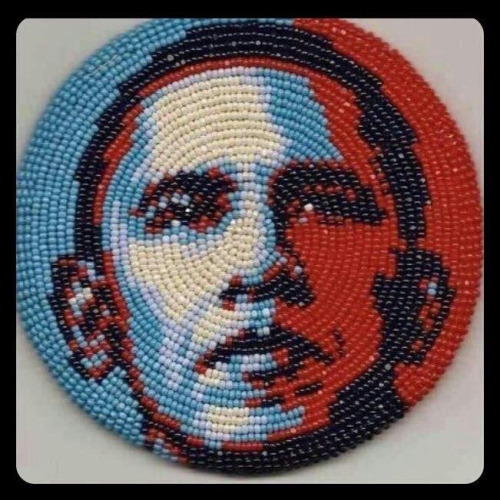
2. Federally Sanctioned State Regulation/Taxation of N2N Commerce: Under guise of the PACT Act, Justice and its ATF have expressly sided with state governments in the enforcement of state civil regulatory laws and tax statutes against tribal governments and entrepreneurs who sell value-generated and other tobacco products from reservation to reservation. Despite the Fed's status as Trustee to Indians, which trust relationship the U.S. does not have to states, the Obama Administration has done so without any meaningful consultation with Indian Country. Even worse, the U.S. threatens to set a precedent of state regulation and taxation of any form of inter-tribal or reservation-to-reservation commerce or trade. Justice and ATF must immediately stand down, in deference to Indian self-sufficiency.

3. President's Unholy Alliance With Big Labor: President Obama struck deals with both Big Labor and Indian Country during his first election. Over the past four years, the Department of Labor has launched un unprecedented assault against Indian Country on behalf of labor unions and employees. In other words, the President has chosen the side of labor interests, which should come as no surprise given his strong predisposition to labor unions. Under banner of the NLRA, most notably, but also OSHA and ERISA, the agency has aggressively challenged tribal self-governance and in the process dishonored notions of tribal territorial authority and federal-tribal consultation. What Labor ultimately threatens to do is ensure that all federal labor laws of so-called general applicability, uniformly govern labor and employment in Indian Country, to the exclusion of tribal self-governance over those areas. Labor should also stand down, in deference to tribal self-governance.

4. Business As Usual With Interior Post-Cobell: It also remains business as usual for the Department of the Interior and BIA as to Indian trust land management, or mismanagement. Indeed, despite so-called "lessons learned" from Cobell, Interior and the BIA have not fundamentally changed the way they carry out the federal trust responsibility to Indian landowners, especially allottees. The $1.9 billion dollar Indian land consolidation, or "buy-back" program, exclaims this point, as Professor David Wilkins observes; instead of exploring new ways to resolve the fractionation epidemic, like Indian estate planning, Interior proposes to band-aid the disease, by creating a $285 million land consolidation/buy-back program, for career BIA employees to administer. All the while, they ignore and do nothing to propose resolution to the real problem of fractionation: non-Indian ownership of undivided interests in allotments. In other words, the more things change (Cobell), the more they stay the same -- and the same will hold true for Cobell-style Indian land controversy.

This critique is not to suggest that the President has not done more for American indigenous people that any President before him; indeed, he has done more than his ever predecessor. Nor is it to suggest naiveté that any President can stand absolutely allegiant to Indian Country in true respect for tribal sovereignty; indeed, no United States President can or ever will. But this critique is to suggest that the Obama Administration can, fundamentally, do more to respect the inherent rights of Native Nations and to resolve historic federal-tribal atrocities, during the President's next four years in the White House.  Yes he can.

Gabriel "Gabe" Galanda is a partner at Galanda Broadman PLLC, of Seattle, an American Indian owned law firm.  He is an enrolled member of the Round Valley Indian Tribes of Covelo, California.  Gabe assists tribal governments and businesses in all matters of tribal economic development and diversification, including entity formation and related tax strategy. He also helps tribes and tribal businesses and joint ventures withstand attack from federal, state and local government. Gabe can be reached at 206.691.3631 or gabe@galandabroadman.com.

Indian Country Lawyers Galanda Broadman Open New Seattle Office

Galanda Broadman, PLLC, is proud to announce the opening of its new office in North Seattle, Washington. Come see us!

Galanda Broadman, “An Indian Country Law Firm,” is dedicated to advancing tribal legal rights and Indian business interests. The firm, which is headquartered in Seattle, and also has offices in Bend, Oregon, represents tribal governments, businesses and members in critical litigation, business and regulatory matters, especially in matters of Indian Treaty rights, tribal sovereignty and taxation.

In November 2012, Galanda Broadman received a prestigious Tier 1 ranking in the 2013 Edition of U.S. News - Best Lawyers “Best Law Firms,” in the arena of Native American Law. In addition, firm co-founder Gabe Galanda was then named to The Best Lawyers in America in the practice areas of both Gaming Law and Native American Law, for the seventh straight year. Also, last month Lawyers of Color listed the firm in its Big Book of the Best Boutiques, an exclusive list of the top minority law firms in each state.

Gabe is an enrolled member of the Round Valley Indian Tribes of California. He currently sits on the National Native American Bar Association (NNABA) Board of Directors, chairing the group’s “Include Indian Law on State Bar Exams” Initiative, and co-chairing its “Increase Natives and Tribal Court Judges in the Judiciary” Initiative. Gabe is a past President of the Northwest Indian Bar Association and past Chair of the Washington State Bar Association (WSBA) Indian Law Section.

Co-founder Anthony Broadman is the immediate past Chair of the WSBA Administrative Law Section, and author of “Administrative Law in Washington Indian Country.”  In September 2012, Anthony was specially honored for his outstanding service as Chair of the Administrative Law Section.  He is a former Trustee of the WSBA Indian Law Section, and also serves as Editor-in-Chief of the Section’s Indian Law Newsletter. Anthony has been named a Rising Star by Washington Law & Politics-Super Lawyers magazine.

Ryan Dreveskracht is a firm associate. Prior to joining Galanda Broadman he was a law clerk to the Honorable Kathleen Kay, in the U.S. District Court for the Western District of Louisiana. Ryan has published ten journal and law review articles in 2011-12 alone, on issues like tribal renewable energy, and has served as the Managing Editor for the National Lawyer’s Guild Review since 2010.

Galanda Broadman Named Amongst Washington Puget Sound Region's "Best Lawyers in the Business"

Seattle Business Magazine has honored Galanda Broadman, PLLC, in its listing of "the Puget Sound Region's Best Lawyers for 2013," in both the arenas of Gaming Law and Native American Law. The firm was selected as some of the "best lawyers in the business" in the State of Washington by Galanda Broadman's peers, and is the only American Indian-owned law firm to receive these honors. This honor follows several other recent honors for Galanda Broadman and its lawyers. In November 2012, Galanda Broadman received a prestigious Tier 1 ranking in the 2013 Edition of U.S. News - Best Lawyers “Best Law Firms,” in the arena of Native American Law. In addition, firm co-founder Gabe Galanda was then named to The Best Lawyers in America in the practice areas of both Gaming Law and Native American Law, for the seventh straight year. Gabe was named a "Difference Maker" by the American Bar Association in November as well. Also, last month Lawyers of Color listed the firm in its Big Book of the Best Boutiques, an exclusive list of the top minority law firms in each state.

"This honor gives us great pride. We work our very hardest for our tribal clients and to receive recognition from them and from our peers feels awesome," said Gabe in a recent Indian Country Today interview. "We are privileged to be entrusted to represent tribal governments and Indian people, frequently during very critical times. It is the opportunities that our tribal clients have given us, and the results we have been able to obtain for them, and the underlying teamwork with our clients and each other that resulted in this honor. We feel as grateful to our tribal clients for those opportunities as we feel honored by this accolade."

Galanda Broadman, PLLC, “An Indian Country Law Firm,” is dedicated to advancing tribal legal rights and Indian business interests. The firm, which is headquartered in Seattle, Washington and also has offices in Bend, Oregon, represents tribal governments, businesses and members in critical litigation, business and regulatory matters, especially in matters of Indian Treaty rights, tribal sovereignty and taxation.

Gabe is an enrolled member of the Round Valley Indian Tribes of California. He currently sits on the National Native American Bar Association (NNABA) Board of Directors, chairing the group’s “Include Indian Law on State Bar Exams” Initiative, and co-chairing its “Increase Natives and Tribal Court Judges in the Judiciary” Initiative. Gabe is a past President of the Northwest Indian Bar Association and past Chair of the Washington State Bar Association (WSBA) Indian Law Section.

Anthony is the immediate past Chair of the WSBA Administrative Law Section, and author of “Administrative Law in Washington Indian Country.”  In September 2012, Anthony was specially honored for his outstanding service as Chair of the Administrative Law Section.  He is a former Trustee of the WSBA Indian Law Section, and also serves as Editor-in-Chief of the Section’s Indian Law Newsletter. Anthony has been named a Rising Star by Washington Law & Politics-Super Lawyers magazine.

Ryan Dreveskracht is a firm associate. Prior to joining Galanda Broadman he was a law clerk to the Honorable Kathleen Kay, in the U.S. District Court for the Western District of Louisiana. Ryan has published ten journal and law review articles in 2011-12 alone, on issues like tribal renewable energy, and has served as the Managing Editor for the National Lawyer’s Guild Review since 2010.

Tribal Energy Lawyer-Scholar Ryan Dreveskracht Publishes Tribal Solar Power Article

Ryan Dreveskracht has published his latest law review article on the topic of tribal renewable energy "Economic Development, Native Nations, and Solar Projects," in The American Journal of Economics and Sociology. It is available for free download here.

This article examines the issues surrounding sustainable eco- nomic development in American Indian country via the implementation of solar energy projects. The second section addresses Native American economic development, generally, focusing on practical sovereignty, capable institutions, and cultural match. The third section discusses solar energy projects: the benefits of solar energy when compared to other types of energy production; the ways that these projects will benefit Indian country specifically; and the rationale behind implementing solar energy projects as a means to sustainable economic development in Indian country. The fourth section will briefly discuss the question: Given the advantages of solar energy that the article advocates, why is the uptake in Indian country not already prolific?

In November 2012, he published "Alternative Energy in American Indian Country: Catering to Both Sides of the Coin," in the latest edition of Energy Law Journal.

Ryan Dreveskracht is an Associate at Galanda Broadman PLLC, of Seattle, an American Indian majority-owned law firm. His practice focuses on representing businesses and tribal governments in public affairs, energy, gaming, taxation, and general economic development. He can be reached at 206.909.3842 or ryan@galandabroadman.com.

Fiscal Cliff Bill Affords Indian Country Tax Relief, Suprisingly

As Indianz.com reports, the "fiscal cliff" bill includes several provisions that are designed to stimulate employment and economic opportunities in Indian Country. The Indian Employment Tax Credit, which encourages businesses to hire tribal members and their spouses, expired in December 2011 but is now retroactivated to 2012 and extended until the end of 2013.

The Accelerated Depreciation Incentive, which helps businesses locate on Indian lands, also expired in December 2011 but also received a two-year extension, until the end of 2013.

A production credit for coal facilities that were placed in service in Indian Country before 2009 was also extended until January 2014.

The New Market Tax Credit Program was extended through the end of 2013, with $3.5 billion in tax credits allocated for each year.

At the original request of the U.S. Department of the Interior’s Office of Indian Energy and Economic Development, Gabe Galanda has written a paper that explains the interplay of all of these and other tax advantages in Indian Country, titled, "The Business Case for Private Investment and Development in Indian Country." It is available here.

Gabriel "Gabe" Galanda is a partner at Galanda Broadman PLLC, of Seattle, an American Indian owned law firm.  He is an enrolled member of the Round Valley Indian Tribes of Covelo, California.  Gabe assists tribal governments and businesses in all matters of tribal economic development and diversification, including entity formation and related tax strategy. He also helps tribes and tribal businesses and joint ventures withstand attack from federal, state and local government. Gabe can be reached at 206.691.3631 or gabe@galandabroadman.com.