Seattle Indian Lawyer Gabe Galanda Named a "Difference Maker" by the American Bar Association

Gabriel “Gabe” Galanda was honored with the “Difference Maker Award” by the American Bar Association at the Fall Leadership Meeting and National Solo & Small Firm Conference in Seattle on October 12, 2012. Gabe, an enrolled member of the Round Valley Indian Tribes of California, was honored for his twelve years of bar leadership and pro bono service, primarily in helping recruit more Native American lawyers to the profession in the Pacific Northwest through scholarship fundraising; promoting mainstream legal understanding of Indian legal issues through state bar examination in Washington and elsewhere; and leading the effort to restore the religious freedoms of Native American prisoners in Washington State (See “Native Son,” Bar Bulletin, August 2012).

Washington Supreme Court Justice Steven Gonzalez, King County Superior Court Judge Mary Yu, and U.S. District Court Bankruptcy Judge Karen Overstreet were also named Difference Makers by the American Bar Association (ABA) – the country’s largest voluntary association of lawyers, with over 400,000 members, with a stated mission of “defending liberty and delivering justice as the national representative of the legal profession."

Gabe recently authored a widely discussed article, “Off-Color State Judicial Elections: Voting and Race” in Washington State (Bar Bulletin; Crosscut).  He currently sits on the National Native American Bar Association (NNABA) Board of Directors, chairing the group’s “Include Indian Law on State Bar Exams” Initiative, and co-chairing its “Increase Natives and Tribal Court Judges in the Judiciary” Initiative.

He is a founding Partner of Galanda Broadman, PLLC, an American Indian-owned law firm with office in Seattle and Bend, Oregon, dedicated to advancing tribal legal rights and Indian business interests.  Gabe’s practice focuses on complex, multi-party litigation and crisis management, and economic diversification and tax strategy, representing tribal governments and businesses and Indian citizens.  He also serves as a tribal appeals court and administrative law judge, and mediates and arbitrates Indian Country-related disputes.

Selected to The Best Lawyers in America® from 2007 to 2013, Gabe was also named as one of the best lawyers in Washington State by Puget Sound Business Journal in 2011.  He was named to the Puget Sound Business Journal’s “40 Under 40” list, as well as to the National Center for American Indian Enterprise Development’s “Native American 40 Under 40” list in recognition of his status as an emerging leader in the legal industry, in 2009. Washington Law & Politics/Super Lawyers magazine named Gabe a “Rising Star” for ten of the last twelve years, most recently this year, and Washington Law & Politics named him one of Washington’s four Leading Edge Litigators in 2003.  In 2004, he was awarded both the Washington State Bar Association Young Lawyers Division’s Outstanding Young Lawyer Award, and the Northwest Indian Bar Association’s Native Justice Award.

Gabe was born and raised in Port Angeles, Washington.  In 1995, he received his A.A. from Peninsula College, where he served as Associate Student Body President.  He received his B.A. in English Literature from Western Washington University in 1997, and his J.D. from the James E. Rogers College of Law at the University of Arizona in Tucson, in 2000.  At Arizona, he served as President of the Native American Law Students Association.

Good Agreements Make Good Neighbors

The Tacoma News Tribune reported this week that the City of Lakewood and the Nisqually Tribe have entered into a fee for service agreement related to the Tribe’s new convenience store.  The Tribe will reportedly pay $19,000/year for services. The article notes, “Without the agreement, the tribe wasn’t required to pay taxes, but the city also wasn’t on the hook to provide public services.”  This may be half true.  Once in trust, the tribe wouldn’t be liable for certain taxes.  But do cities withhold services from non-Tribal entities who do not pay taxes or refuse to enter into fee-for-service agreements?  Especially when such entities are exempt as a matter of federal law?  Probably not.

Moreover, withholding services based on citizenship of an owner seems problematic.  Regardless, these potential problems illustrate the wisdom of such agreements .  Like good fences, good interlocal agreements make for much better neighbors.

Anthony Broadman is a partner at Galanda Broadman PLLC.  He can be reached at 206.321.2672, anthony@galandabroadman.com, or via www.galandabroadman.com.


Gabe Galanda Publishes "Off-Color State Judicial Elections: Voting and Race"

Gabe Galanda published an article, "Off-Color State Judicial Elections: Voting and Race," in this month's King County Bar Association Bar Bulletin. The article is available online here (abbreviated; login required) and in reprint here (full). A couple excerpts:

Because African Americans, Latinos and Native Americans are disproportionately poor, they contribute significantly less money to political campaigns than European Americans. Knowing this reality, candidates, including judicial candidates, generally care less about ethnic minorities’ electoral interests. In turn, racial minorities may feel further marginalized such that they disregard judicial elections altogether and, if or when in court, they disproportionately fear that a judge is more accountable to majority or corporate ideology than to stare decisis or the rule of law. Add finally into this debate the utter lack of elected representation for minorities in most areas of the state. The combined Latino population for 10 counties in Central and Eastern Washington, for example, is a bit higher than 33 percent. Yet, Latinos hold only 4% of those regions’ elective offices and not a single Latino lawyer has ever been elected to the bench in Eastern Washington. The same goes for Native Americans, who have yet to see an Indian judge elected to the state bench anywhere in Washington.
Gabriel "Gabe" Galanda is a partner at Galanda Broadman PLLC, of Seattle, an American Indian owned law firm.  He is an enrolled member of the Round Valley Indian Tribes of Covelo, California.  Gabe serves as a Quinault Nation Court of Appeals Judge and a tribal administrative law judge for other tribes, as well as mediates and arbitrates Indian Country-related disputes. Gabe can be reached at 206.691.3631 or gabe@galandabroadman.com.

Can Washington Afford to Re-elect Justice Richard Sanders?

In 2005, former Washington State Supreme Court Justice Richard Sanders, who is again running for the Court this fall, stated: “[N]o private person or group can possibly threaten judicial independence because the independence about which we speak is independence from the executive and legislative branches of government—not independence from the private sector.” “Judge-Election System Works Well,” The Seattle Times, Aug. 9, 2005.

Sanders’ position approaches the slippery slope toward partisan state judicial elections, which the Ninth Circuit Court of Appeals endorsed earlier this month under the auspices of the U.S. Supreme Court's Citizens United decision. Sanders County Republican Committee v. Bullock, No. CV-12-00046 (9th Cir., Sept. 17, 2012).

However, under no circumstance should we allow our state to go down that slide. According to a recent empirical study, when judges are elected in partisan elections, “every dollar of direct contributions from business groups is associated with an increase in the probability that the judges will vote for business litigants.” Michael S. Kang & Joanna Shepherd, “The Partisan Price of Justice: An Empirical Analysis of Campaign Contributions and Judicial Decisions,” 86 N.Y.U. L. Rev. 69 (2011).

Indeed, Justice Sandra Day O’Connor wrote upon her retirement: “When you enter one of these courtrooms, the last thing you want to worry about is whether the judge is more accountable to a campaign contributor or an ideological group than to the law.” “Take Justice off the Ballot,” The New York Times, May 22, 2010.  Partisan judicial races will only compound this problem.

Even though partisan judicial races are not yet allowed in Washington State, we in the Evergreen State need to now ask ourselves: Should we be worried that if Richard Sanders is re-elected to the State Supreme Court, he would be more accountable to business groups than to the rule of law? I think so.  Put differently, can the average Washingtonian afford to elect him?  I think not.

Gabriel "Gabe" Galanda is a partner at Galanda Broadman PLLC, of Seattle, an American Indian owned law firm.  He is an enrolled member of the Round Valley Indian Tribes of Covelo, California.  Gabe serves as a Quinault Nation Court of Appeals Judge and a tribal administrative law judge for other tribes, as well as mediates and arbitrates Indian Country-related disputes. Gabe can be reached at 206.691.3631 or gabe@galandabroadman.com.

Gabe Galanda Addresses NAFSA Regarding Tribal Online Lending Precautionary Defense Measures

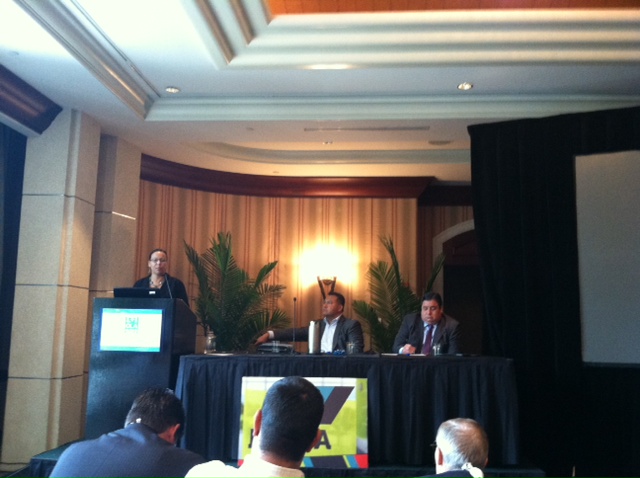
Today, Gabe Galanda addressed the Native American Financial Services Association (NAFSA), in a presentation titled, "A Quick History Lesson: Foundational Elements of Tribal Sovereignty, Tribal Self-Governance and the Government to Government Mandate." He delivered his remarks (slides here) at the Tribal Government Online Lending Symposium Presented by the Online Lending Association and NAFSA. Gabe specifically discussed notions of inherent sovereignty and preemptive consultation as means of countervailing federal and state attacks against tribal online lending activities.

Gabriel "Gabe" Galanda is a partner at Galanda Broadman PLLC, of Seattle, an American Indian owned law firm.  He is an enrolled member of the Round Valley Indian Tribes of Covelo, California.  Gabe assists tribal governments and businesses in all matters of tribal economic development and diversification, including entity formation and related tax strategy. He also helps tribes and tribal businesses and joint ventures withstand attack from federal, state and local government. Gabe can be reached at 206.691.3631 or gabe@galandabroadman.com.

Gabe Galanda Republishes Tribal Economic Diversification Paper

Gabe Galanda published an updated version of his paper, "The Business Case for Private Investmentand Development in Indian Country," at the 12th Annual Native Nations Law Symposium that was held on the Kickapoo Reservation in Kansas on September 14th. He added new topics such as several federal Indian Country tax incentives that Congress has allowed to expire, as well as the HEARTH Act. He originally published the paper at RES 2011, at the request of the U.S. Department of the Interior's Office of Indian Energy and Economic Development.

[W]hile state and local governments struggle to make ends meet [amidst the Great Recession], tribal governments have largely avoided economic catastrophe. Fueled by the $26 billion Indian gaming industry, Indian Country is generally faring much better than neighboring local economies since the recession took hold in 2008. Ironically, not having property tax bases to begin with, most tribal governmental revenues have remained stable. Many tribes are avoiding complacency; they recognize that the Indian gaming industry will not sustain its exponential growth over the last decade. The inevitable legalization of Internet gaming and, in some jurisdictions, commercial land-based gaming, will eventually put a major dent in Indian Country’s bottom line. As such, tribal governments are more than ever looking to diversify their economies.

Where tribes bring a staggering array tangibles like land and location, and intangibles like sovereignty, relaxed red tape and tax exemption, their corporate business partners bring proven industry expertise and new capital to the reservation. Whether through a joint venture between a tribe and a non-Indian business, a tribal land lease to a non-tribal company, or a tax credit investment – all of which are contemplated below – there are an abundance of very advantageous reservation development deals for Corporate America to symbiotically explore with tribes at this time in our nation’s history. The time is now for tribes to leverage these advantages to create new economic and job opportunities on their reservations.

Gabriel "Gabe" Galanda is a partner at Galanda Broadman PLLC, of Seattle, an American Indian owned law firm.  He is an enrolled member of the Round Valley Indian Tribes of Covelo, California.  Gabe assists tribal governments and businesses in all matters of tribal economic development and diversification, including entity formation and related tax strategy. Gabe can be reached at 206.691.3631 or gabe@galandabroadman.com.

Ryan Dreveskracht Warns Indian Country About the STOP Act

Today, Ryan Dreveskracht spoke about the disastrous implications for Indian Country associated with the STOP Act, at the "Knowledge is Power! 2012 Tribal Tobacco Tax Training and Seminar" sponsored by HCI Distribution at WinnaVegas Casino Resort located in Sloan, Iowa. His PowerPoint slides can be downloaded here.

Ryan Dreveskracht is an Associate at Galanda Broadman PLLC, of Seattle, an American Indian majority-owned law firm. His practice focuses on representing businesses and tribal governments in public affairs, energy, gaming, taxation, and general economic development. He can be reached at 206.909.3842 or ryan@galandabroadman.com.

Federal Indian Country Tax Incentives Expire

Amidst partisan gridlock in the Beltway over national tax policy, Congress has allowed several tax incentives designed to attract private development and jobs to Indian Country, to expire. Others will expire unless Congress acts. Indeed, amidst much election-year debate about the American small business sector and middle class, Indian Country's private sector and hope for a robust middle class has been forgotten by Congress.

-- The accelerated depreciation program, which allows manufacturers with facilities in Indian Country to use shorter recovery periods when calculating depreciation deductions for production equipment, has been unavailable since January 1, 2012. Legislation has been introduced that would reauthorize the provision until 2014. S. 3521, 112th Cong. § 211 (2012); H.R. 6240, 112th Cong. § 201 (2012).

-- The Indian Employment Tax Credit, which provides businesses with an incentive to hire individuals who are enrolled members of an Indian tribe (or the spouse of an enrolled member) and who live on or near an Indian reservation, expired on December 31, 2011. Legislation has been introduced that would retroactively extend the program to December 31, 2013. S. 3521, 112th Cong. § 204 (2012).

-- The Low-Income Housing Tax Credit Program, through which tax credits are available for low-income housing projects on homes that that were constructed, rehabilitated or acquired since 1986, including those in Indian Country, are currently available to until only September 30, 2011. Legislation has been introduced to extend the credits to January 1, 2014. S. 3521, 112th Cong. § 203 (2012).

-- The Work Opportunity Tax Credit, a federal tax credit incentive for private-sector businesses that hire individuals from twelve target groups who have consistently faced significant barriers to employment, including certain Indians, expired in 2011. Legislation has been introduced that would extend the WOTC to December 31, 2013. S. 3521, 112th Cong. § 209 (2012).

Indian Country must urge that these tax incentives be extended so that tribal governments can continue to attract private capital and create new jobs for tribal members and neighboring communities. Between now and November any calls to Capitol Hill will likely fall on deaf ears. But come after the election, tribal constituents should call their Delegation to urge that Indian Country's tax and job needs not be forgotten.

Gabriel "Gabe" Galanda is a partner at Galanda Broadman PLLC, of Seattle, an American Indian owned law firm.  He is an enrolled member of the Round Valley Indian Tribes of Covelo, California.  Gabe assists tribal governments and businesses in all matters of tribal economic development and diversification, including entity formation and related tax strategy. Gabe can be reached at 206.691.3631 or gabe@galandabroadman.com.

Anthony Broadman Co-Chairs Annual Ad Law Conference

Anthony Broadman, the current Chair of the WSBA Administrative Law Section, will co-chair, the "Advocacy in Administrative Law" conference in Seattle on October 24, 2012. Earlier this year, he published a chapter, "Administrative Law in Washington State Indian Country" in the Section’s Washington Administrative Practice Manual -- an authoritative text on administrative law in Washington Indian Country.

Anthony Broadman is a partner at Galanda Broadman PLLC. He can be reached at 206.321.2672, anthony@galandabroadman.com, or via www.galandabroadman.com.

Indian Civil Rights Lawyers

We represent Indians and others in civil rights matters, especially against the United States, state government and private entities. Our experience includes:

-- Suing the United States pursuant to the Administrative Procedures Act (APA) for violation of Indian Treaty, land and related civil rights.

-- Suing the United States pursuant to the Federal Tort Claims Act (FTCA) for claims resulting from tortuous acts or omissions arising from self-governance or "638" contractual functions.

-- Suing federal, state, county and city police officers for Section 1983 and other claims related to excessive use of force and other forms of racial discrimination and retaliation against Indians.

-- Suing public and private health care providers for discriminating against Native Americans.

-- Suing public and private defendants for the wrongful death of or serious injury to Native Americans.

-- Suing public and private employers for racial, religious and other discrimination against Indians.

If you or a loved one's civil rights have been violated, call us.