Uncategorized

Big Tobacco’s Latest Assault On Tribes

By Anthony Broadman

As recently as last year, Big Tobacco appeared to have forged a formidable alliance with both the feds and states against Tribal tobacco.  But when the ATF withdrew its position under the PACT Act, it pulled the lynchpin to that alliance.  Now, and by no coincidence, at least RJ Reynolds has turned on the feds in connection with Tribal Tobacco.

Last week, Reynolds filed suit against the U.S. Department of Agriculture in the latest attack in Big Tobacco’s war on Tribal economic development.  In the lawsuit, RJ Reynolds alleges that the USDA has failed to collect fees from tribal cigarette manufacturers, and in doing so has artificially inflated the amount that RJ Reynolds is required to pay.images-1

Of course, Big Tobacco cannot pursue Tribal entities directly, so it has targeted federal agencies—here, the USDA through the Administrative Procedures Act (“APA”).  RJ Reynolds alleges that the USDA refused to recalculate Reynolds’ share of fees because the evidence presented by the tobacco maker to the agency was insufficient.  Suffice it to say, however, Big Tobacco is not letting the feds off that easy.

The suit raises numerous red flags for tribes.  For one, tribes are indispensible parties who cannot be joined because of their sovereign status, warranting dismissal pursuant to Fed. R. Civ. Proc. 19.  In addition, if the USDA intends to take any action in connection with including tribal tobacco in its calculation of Tobacco Trust Fund fees, it will have to consult with affected Tribes pursuant to its consultation policy  or risk being sued by those Tribes under the APA.

In all, while RJ Reynolds may not succeed in prosecuting its lawsuit, the suit is another sign that Big Tobacco will keep the pressure on the federal government regarding tobacco in Indian Country.

Anthony Broadman is a partner at Galanda Broadman PLLC. He can be reached at 206.321.2672, anthony@galandabroadman.com, or via www.galandabroadman.com.

 

Gabe Galanda Named to Best Lawyers in America for 9th Year

Gabe Galanda has been honored as one of the Best Lawyers in America, in both Gaming Law and Native American Law, for the ninth straight year.  He has now received the award in each year from 2007 to 2015. Screenshot 2014-08-19 09.52.02

Gabriel “Gabe” Galanda is the Managing Partner at Galanda Broadman. He is a citizen of the Round Valley Indian Tribes. Gabe can be reached at 206.300.7801 or gabe@galandabroadman.com.

Edward Snowden and Attorney-Client Privileged Tribal Emails

According to Jurist:

American lawyers have been concerned for some time that the legally protected space for attorney-client communications is shrinking. But recent reports detailing massive electronic surveillance by the US government suggest truly confidential communications may largely be a thing of the past.

Documents leaked to the press over the past year by former NSA contractor Edward Snowden reveal that the US government is sweeping up vast amounts of private data and communications, including confidential imagesinformation related to ongoing legal matters and privileged communications between attorneys and their clients. . . .

Concerns are especially pronounced in contexts where the US government is an opposing legal party. . . . As one prominent public interest lawyer put it, fear of government surveillance makes sense in part because the government that holds all of the surveillance information is also "the adversary we're worried about."

Should tribes be concerned that the United Sates has swept up confidential emails and other electronic communications between tribal clients and lawyers?

Tribes and tribal lands have too frequently been referred to as havens for organized crime and, more recently, for terrorism, especially by way of gaming and tobacco industries.  So I would not rule out NSA surveillance in Indian Country.

And with tribes now duking it out in federal court with the likes of the holier-than-thou FBI and ATF, I, too, would not rule out the possibility of DOJ gaining access to the data and using it for litigation advantage.

Tribal lawyers and leaders, take note, and take precaution.

Gabriel “Gabe” Galanda is the Managing Partner at Galanda Broadman. He is a citizen of the Round Valley Indian Tribes. Gabe can be reached at 206.300.7801 or gabe@galandabroadman.com.

Disenrollment: Severing The Seven Generations

In all of your deliberations...in your efforts at law making, in all your official acts, self-interest shall be cast into oblivion....Look and listen for the welfare of the whole people and have always in view not only the present but also the coming generations, even those whose faces are yet beneath the surface of the ground – the unborn of the future Nation. -- Great Law of the Iroqouis

While some tribes who terminate their own people, spare the ancestors by not “posthumously disenrolling” them, any disenrollment of a descendant amounts to disenrollment of the dead.

Today’s disenrollees descend from Treaty Chiefs, reservation founders, original allottees, termination defenders, and other tribal matriarchs and patriarchs.  Many of those ancestors signed a Treaty or accepted an Indian homestead, or defended those Indian holdings, to ensure that the coming “seven generations” would survive.article-2141789-1300CAC2000005DC-351_634x455

So when a tribe severs the ancestors’ so-called “down line” of lineal descendants,the ancestors are essentially disenrolled—or dismembered—too. The seven generations are severed.

What offending tribes fail to fully appreciate is that along with the jettisoned ancestors go the tribe’s legitimate ties to aboriginal lands, sacred sites, time-honored rites, and so much more that makes the tribe tribal.

Indeed, to disenroll is to cut off a tribe’s nose to spite its face.  It is self-dismemberment.

Gabriel “Gabe” Galanda is the Managing Partner at Galanda Broadman, an American Indian law firm dedicated to defending Indian rights. He is a citizen of the Round Valley Indian Tribes. Gabe can be reached at 206.300.7801 or gabe@galandabroadman.com.

Disenrolling the Dead

Your dead cease to love you and the land of their nativity as soon as they pass the portals of the tomb and wander away beyond the stars. They are soon forgotten and never return. Our dead never forget this beautiful world that gave them being. They still . . . yearn in tender fond affection over the lonely hearted living, and often return from the happy hunting ground to visit, guide, console, and comfort them. -- Chief Seattle

There is perhaps nothing more reviling about disenrollment, than the disenrollment of ancestors, or what offending tribes call "posthumous disenrollment."

It has happened at Saginaw Chippewa, at Las Vegas Paiute, at Robinson Rancheria, and most recently, at Grand Ronde. And it could happen to your ancestors, and to you.

The reason the offending tribes--or more precisely, their lawyers--or even more precisely, their non-Indian lawyers--disenroll the dead is because many IRA tribal constitutions include language that says if you descend from an enrolled tribal member (and satisfy other requirements, like blood quantum), you are entitled to tribal membership too.

nrcs141p2_023298

As such, in order to disenroll large swaths of tribal members, as is happening at now epidemic levels, an offending tribe must go back multiple generations on a family's tree, to disenroll not only the living, but the dead.

Beyond rightful moral outrage to so disturbing and dishonoring the ancestors, the maneuver raises due process questions, especially insofar as an offending tribe does not give even the ancestors' living descendants notice or opportunity to be heard.

To some tribes death is so sacred that the community can never again utter an ancestor's name; they are to be left in peace.

To other tribes, nothing is sacred.

Gabriel “Gabe” Galanda is the Managing Partner at Galanda Broadman. He is a citizen of the Round Valley Indian Tribes. Gabe can be reached at 206.300.7801 or gabe@galandabroadman.com.


Another State Tax Man Smackdown; Tribal Property Tax Win

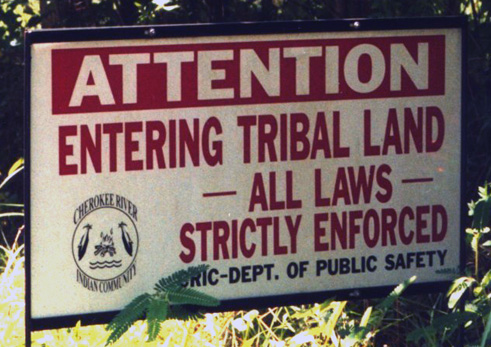
Today, the Second Circuit Court of Appeals smacked down a New York county assessor's attempt to foreclose upon Cayuga-owned fee lands in a desperate attempt to recover state ad valorem property taxes from the Tribe. Cayuga was a benefactor of both the Oneida Nation's genius mooting of Oneida Indian Nation of N.Y. v. Madison County, before the U.S. Supreme Court, as well as the Bay Mills Tribe's lucky win before the Supreme Court in Michigan v. Bay Mills Indian Community.  Bay Mills should have been mooted too.

sign-entering_tribal_land

The Cayuga decision represents another win in a surprising run for tribes in state property tax or fee assessment disputes before federal circuit courts of appeals.

Last year, the Ninth Circuit struck down property taxes on permanent improvement to Chehalis tribal trust lands in Confederated Tribes of Chehalis Reservation v. Thurston County Bd. of Equalization; and the Seventh Circuit struck down a local assessment of stormwater "fees" against Oneida trust lands in Oneida Tribe of Wisc. Indians v. City of Hobart.

Amidst serial federal court losses in other state-tribal tax contexts (i.e. sales and excise taxation), it seems that Indian property tax or tax-related cases are still winnable.  See also Crow Tribe of Indians v. Montana (9th Cir. 1987).  Granted, Cayuga was a sovereign immunity, not Bracker, case but the county's suggested in rem exception to tribal immunity would have catalyzed state taxation of Indian property nationwide.

In any event, Richard Guest of NARF's advice remains sound:

Stay out of the courts! The federal courts are not your friends anymore.  The majority of judges sitting on the lower federal courts were appointed by Bush II – very conservative, have no understanding of Indian country at all. No interest in your issues. And that can be said of the Roberts court as well. It’s a very difficult place for tribes to secure victories.

Difficult, but thankfully not impossible, at least in the Indian property tax context.

Gabriel “Gabe” Galanda is the Managing Partner at Galanda Broadman, which handled various Indian tax controversies. He is a citizen of the Round Valley Indian Tribes. Gabe can be reached at 206.300.7801 or gabe@galandabroadman.com.

Inconvenient Truths: Keeping C-Stores Honest On Tribal Tobacco

By Anthony Broadman

The Association for Convenience and Fuel Retailing (NACS) again attacked tribal tobacco today, this time before the U.S. Senate Committee on Finance.  A long time enemy of legitimate tribal tobacco businesses, the convenience store lobbying group continued to parrot the arguments of big tobacco and attempted to fundamentally mislead the Committee in a statement today.

NACS, part of the “deadly alliance” between convenience stores and big tobacco, has an enormous dog in the tribal tobacco tax fight.  Sales of tribal tobacco undercut the roughly $260-billion in sales of tobacco at NACS constituent stores.  But what is more sinister is that NACS is using federal and state political pressure to carry its water in what amounts to anti-competitive marketing campaign.  Even worse, it’s using misinformation to do so.

NACS's arguments parrot those espoused in the summer of 2011 by Altria, parent company of Philip Morris USA, in an attack on New York tribal smoke shops.  Today, NACS claims:

Many Native American tribes and tribal retailers are abusing their sovereignty to evade state taxes on sales of tobacco. Such tribes and retailers abuse their ability to sell tax-free to their own members and expand those sales to non-members even though the Supreme Court has said states can tax tribal sales to non-members.

The Department of Justice disabused Philip Morris and the rest of Big Tobacco of this blanket statement 15 years ago; tribal tobacco is not “abusing” sovereignty.  States simply lack jurisdiction to interfere with Tribal economic activity when it involves “value generated on the reservations by activities involving the Tribe.”  New Mexico v. Mescalero Apache Tribe, 462 U.S. 324, 340. (1983) citing Washington v. Confederated Tribes of Colville Indian Reservation, 447 U.S. 134 (1980).

In Washington State, as throughout Indian Country, federal law generally bars taxes on products that incorporate “value generated on the reservation,” sold to Indians or non-IndiansSee WAC 458-20-192(c).  In other words, if a Tribe adds value to a product and sells it on the Reservation, it shouldn’t be taxed.  The blanket claim that all sales of tribal tobacco are taxable is incorrect, and irresponsible.  If NACS wants a level playing field as it claims, it should at least correctly state the law.  It can start by letting Tribes decide how to exercise their Tribal sovereignty—not Big Tobacco lobbyists.

NACS argues further:

Native American tribes have immunity from lawsuits in U.S. courts. This immunity is greater than the immunity granted to the United States or foreign governments – all of which can be sued when they act in a commercial rather than a governmental capacity. Tribes have used this unprecedented immunity as a tool to block state efforts to enforce their tax laws. While the federal government can enforce its laws against tribes, states simply cannot.

Stop us if you’ve heard this one before. Which you should have already, because these are exactly the sky-is-falling claims Altria made in 2011 when it argued “Native American Cigarettes Are Not Entitled to ‘Supersovereign’ Immunity.”  Tribal tobacco is regulated by the entities that have authority to do so: the United States and Tribal Governments.  Framing the issue as though Tribes are “block[ing] state efforts to enforce their tax laws” turns basic notions of Tribal Sovereignty on their head.

Tribes are not blocking legitimate state regulatory incursion; in protecting tribal tobacco from illegal state regulation, Tribes are simply enforcing the very component of federal law that NACS so fears: “While the federal government can enforce its laws against tribes, states simply cannot.”  That much is right, NACS.

And instead of honoring that fundamental premise of our federalist system, these convenience store lobbyists ask the Senate to prevent tribes from “us[ing] the cover of their sovereignty” to do business and claim “[t]his is a problem that must be dealt with[.]”  In addition to these veiled requests for an abrogation of Tribal sovereign immunity, NACS wants the United States to limit sovereign immunity for newly recognized Tribes, presumably so that states can sue other Tribes over illegal state tobacco taxes.

NACS should be held to the facts, even when it’s inconvenient.

Anthony Broadman is a partner at Galanda Broadman PLLC. He can be reached at 206.321.2672, anthony@galandabroadman.com, or via www.galandabroadman.com.

Tribal Police: “We Don’t Need No Stinkin’ State Badges!”

By Joe Sexton

Recently, in State of New Mexico v. Sanchez, the New Mexico State Court of Appeals upheld the DUI conviction of a non-tribal defendant arrested by a tribal police officer on Indian lands in New Mexico. The defendant, on appeal, had challenged the authority of the tribal police officer to arrest him.  At first blush, this seems to be a win for Indian Country and tribal sovereignty in general.  Of course the end result is better than a ruling further eroding the minimal authority Tribal police presently retain in Indian Country after a disastrous line of federal court decisions, including the Supreme Court’s disastrous holding in Oliphant v. Suquamish Indian Tribe roughly 36 years ago.

tribalpolicexBut if you dig into the New Mexico court’s decision enough to understand the reasoning underpinning its holding, the illusory nature of tribes’ sovereign power to police their own lands is revealed.  The only reason preventing the New Mexico court from finding that the tribal police officer lacked the authority to arrest an impaired driver on Indian lands is the fact that the tribal officer had been deputized by the non-tribal county government.  In other words, only through the permission of non-tribal entities—many of which are often openly hostile to tribal authority and jurisdiction—is a tribal police officer allowed to arrest a non-tribal person committing a crime in Indian Country.  One line from the court of appeals’ opinion in particular reveals the hollow nature of the tribal police officer’s authority with respect to non-tribal criminal actors on Indian lands:

“The scope of Officer Vigil’s [the tribal police officer] authority depends on the authority given to him by the Santa Fe County Sheriff.”

When you combine the deep-seated racism and anti-tribal sentiment that has festered for generations in and around Indian Country and has infected non-tribal law enforcement, with the often rural nature of Indian reservations, and the court decisions crippling tribal law enforcement’s ability to protect communities situated in Indian Country, this recipe for calamity generally creates lawless havens for criminals and leads to problems of epidemic proportions.

The movement to stem violence against tribal women makes this painfully clear.  According to Lynn Rosenthal, the White House Advisor on Violence Against Women, “Native American women suffer from violent crime at some of the highest rates in the United States.”    Ms. Rosenthal notes that non-Indians constitute “more than 76 percent of the overall population living on reservations and other Indian lands” and, consequently, many of the “abusers of Native American women are non-Indian men.   Thus, “non-Indian men who batter their Indian wives and girlfriends go unpunished” because of the jurisdictional limitations of tribal courts and law enforcement.

Even though Congress recently debated an “Oliphant fix” with respect to violence against women in particular, legislation regarding this problem should not be necessary, and violence against Native American women is not the only malignancy caused by Oliphant and its progeny.  If sovereignty means anything, it means the inherent authority to protect the communities situated within a sovereign’s territory.  But this authority has been stripped away, leaving Tribal law enforcement at the mercy of local jurisdictions if they want any authority to protect their communities from non-tribal criminals.  As Justice Thurgood Marshall noted in his dissent to the Oliphant majority opinion:

"I agree with the court below that the ‘power to preserve order on the reservation . . . is a sine qua non of the sovereignty that the Suquamish originally possessed.’ . . . In the absence of affirmative withdrawal by treaty or statute, I am of the view that Indian tribes enjoy, as a necessary aspect of their retained sovereignty, the right to try and punish all persons who commit offenses against tribal law within the reservation.”

Put another way, the authority of sovereign Indian tribes to arrest and prosecute non-Indians who decide to commit crimes on Indian lands is inherent, and absent legislation or a Treaty to the contrary, no court has the legitimate authority under our system of law to simply erase that inherent authority.  So in the end, it’s a good thing that the New Mexico Court of Appeals did not expand upon Oliphant and further hamstring tribal law enforcement operating within New Mexico.  But Officer Vigil’s authority on tribal lands does not, and should not, depend on whether Santa Fe County decides to cross-deputize him or not.

Joe Sexton is Of Counsel with Galanda Broadman, PLLC, and practices out of Yakima, Washington.  Joe’s practice focuses on tribal sovereignty issues, including land and environmental issues, economic development matters, and complex Indian Country litigation.

Nike, N7 Should Get Off the Sidelines re Redskins Mascot

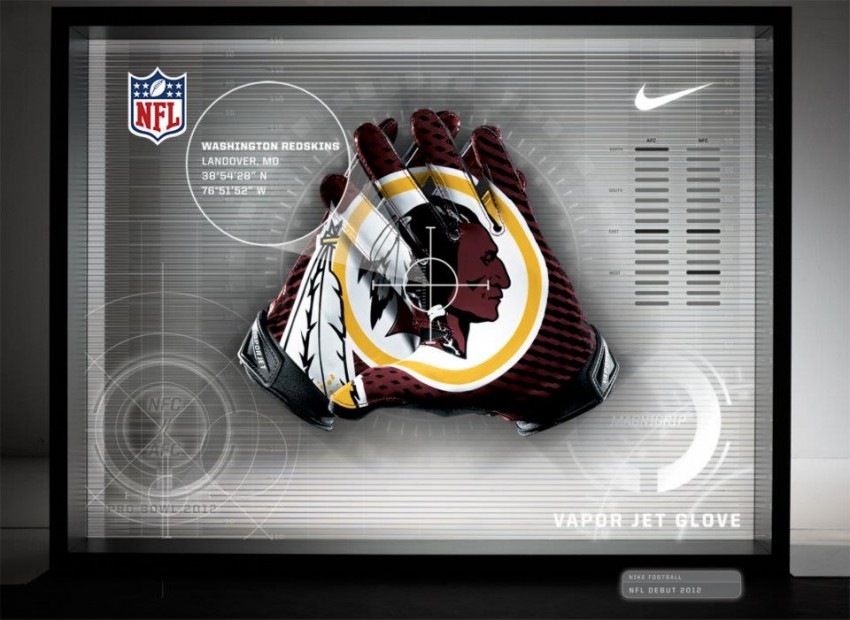
Nike and its N7 Fund have done some amazing things for Native America.  Yet the biggest sports brand on the planet stands on the sidelines of the "Change the Mascot" movement. It is understandable why some of America's biggest companies--Coca Cola and FedEx to name just two --are sitting out the Redskins mascot controversy. Money.  Big Money.

nike-vapor-jet-glove-pro-bowl-washington-redskins-850x620

But unlike those other Fortune 50 companies, Nike has specifically stated a "commitment to bring sport and all of its benefits to Native American and Aboriginal communities in the United States and Canada."  

Of course with that commitment comes business opportunity for Nike, and not merely through the N7 shoes and apparel line.  The much more lucrative play comes through the intangible economic benefits that adorn any well-advertised philanthropic venture like the N7 Fund.

It is rather hypocritical for Nike to "help Native American and Aboriginal youth recognize their proud history," yet sell sports merchandise bearing a logo historically associated with bloody Native American scalps when "in-depth studies that show the harm negative stereotypes and 'Indian' sports mascots have on Native youth."

Nike has thus far largely (but not entirely) ducked the Indian mascot controversy.  That is in part because although national tribal leaders have lambasted the likes of FedEx for not denouncing the Redskins mascot, they have looked past Nike and N7.  Native America has allowed the the world's #1 athletic apparel company to ignore its own social responsibility to denounce racism in professional sports--especially in the form of branded pro sports apparel.

Indeed, without the prominence of Nike and its ever-lasting Swoosh the Redskins mascot might just fade away.

n7And beyond a Nike pronouncement against the racist Redskins mascot being the proverbial "right thing to do," as sports marketing professionals point out, a new Washington NFL team logo "would be a boon for the National Football League and licensees such as Nike Inc., if previous pro-sports team switches are any indication."

It is time for Nike to walk the walk.  They certainly have the shoes in which to do so.

Gabriel “Gabe” Galanda is the Managing Partner at Galanda Broadman. He is an enrolled member of the Round Valley Indian Tribes of Covelo, California. Gabe can be reached at 206.300.7801 or gabe@galandabroadman.com.