"Who's Who" Expected at 15th Annual NW Gaming Law Summit in December

tr_stickssmall.jpg

The Northwest Gaming Law Summit, now in its 15th year, has become a veritable "who's who" event for the Pacific Northwest and national gaming industry. It takes place this year on December 7 and 8, 2017, at the Washington State Convention Center in Seattle, Washington.  

Join Program Co-Chairs Gabriel S. Galanda, a partner and co-founder of Galanda Broadman PLLCFrank L. Miller, a founding member of Miller Malone & Tellefson PS, and Robert M. Tull, owner of the Law Offices of Robert M. Tull.  They lead a outstanding faculty, including:

  • Hon. W. Ron Allen of the Washington Indian Gaming Association
  • Anthony S. Broadman of Galanda Broadman PLLC
  • Nicholas Brown of Pacifica Law Group
  • Hon. Jonodev Osceola Chaudhuri, Chairman of the National Indian Gaming Commission
  • Scott D. Crowell of Crowell Law Office
  • Geoff Freeman of the American Gaming Association
  • Timothy M. Hansen of Hansen Reynolds
  • Hon. Philip Hogen, former Chairman of the National Indian Gaming Commission
  • Vanya Hogen of Hogen Adams
  • Hon. Bill Iyall, Chairman of the Cowlitz Indian Tribe
  • Paul Jacquart of Hansen Reynolds
  • Jerome Levine of Holland & Knight
  • James Maida of Gaming Laboratories International
  • Aurene Martin of Spirit Rock Consulting
  • D. Michael McBride, III of Crowe & Dunlevy
  • Hon. Harold Monteau, former Chairman of the National Indian Gaming Commission
  • Judith Shapiro of the Law Office of Judith Shapiro
  • Hon. Theresa Sheldon of the Tulalip Tribes of Washington
  • Casey Sixkiller of Sixkiller Consulting
  • Christopher Stearns of the Washington State Gambling Commission
  • Ernest J. Stebbins of the Washington Indian Gaming Association
  • Tyrel Stevenson of the Coeur D'Alene Tribe
  • Stephanie Striffler of the State of Oregon Department of Justice
  • Hon. David Trujillo, Director of the Washington State Gambling Commission
  • Kevin Wadzinski of Powers Pyles Sutter & Verville
  • Scott Wheat of the Spokane Tribe of Indians

Gabriel “Gabe” Galanda is the Managing Partner at Galanda Broadman. He belongs to the Round Valley Indian Tribes. Gabe can be reached at 206.300.7801 or gabe@galandabroadman.com.

Galanda Broadman Again Named "Best Firm" in Native American & Gaming Law by U.S. News

usnews.jpg

Galanda Broadman, PLLC, has been named a “Best Law Firm” by U.S. News - Best Lawyers in the arena of Native American Law and Gaming Law, for the sixth year in a row. 

According to U.S. News - Best Lawyers, the firm's national ranking was determined through the firm's overall evaluation, which was derived from a combination of Galanda Broadman’s “clients' impressive feedback” and “the high regard that lawyers in other firms in the same practice area have for [the] firm.” 

Galanda Broadman, “An Indian Country Law Firm,” is dedicated to advancing tribal legal rights and Indian business interests, and defending Indian civil rights. The firm, with eight lawyers and offices in Seattle and Yakima, Washington and Bend, Oregon, represents tribal governments, businesses and members in critical litigation, business and regulatory matters, especially in matters of Indian Treaty rights, tribal sovereignty, taxation, civil rights, and tribal citizenship.

Gabe Galanda Returns Home to Clallam County to Discuss Indian Civil Rights Advocacy

Clallam_County_Courthouse_09-11-13_Wiki.jpg

On Friday, November 3rd, Gabe Galanda will address the Clallam-Jefferson County Pro Bono Lawyers, regarding "American Indian Civil Rights Advocacy."

Gabe will speak at the group's CLE Bonanza at the Sequim Transit Center.  He will be joined by Assistant U.S. Attorney Tate London, who will address “Federal Prosecutions in Indian Country.”

Gabriel S. Galanda is the managing lawyer of Galanda Broadman, PLLC, in Seattle. Gabe is a descendant of the Nomlaki and Concow Tribes, belonging to the Round Valley Indian Tribes of Northern California.  He was born in Port Angeles, Washington and raised in Clallam County, between P.A. and Carlsborg, a hamlet just outside of Sequim.

Gabe Galanda to Talk Tribal Kinship Versus Disnrollment at UNM Gallup

snapshot-.jpg

Gabe Galanda will deliver a lecture on tribal kinship and disenrollment to UNM Gallup classes on Thursday, October 26, 2017. 

His talk will be inspired by the lecture he delivered last week at Western Washington University titled "Restoring Indigenous Kinship Amidst America's Nationalist Movement."

Gabriel S. Galanda is the managing lawyer of Galanda Broadman, PLLC, in Seattle. Gabe is a descendant of the Nomlaki and Concow Tribes, belonging to the Round Valley Indian Tribes of Northern California.  

Silence-Breaker: California Indian Law Association Speaks On Disenrollment

The California Indian Law Association is featuring the following program in Sacramento on Friday, October 14:

1:15 – 2:30 pm Tribal Disenrollment and Exclusions: A Discussion of Tribal Interests
 Moderator: Christina Snider, CILA Vice President
Panelists:
                 [INVITED]Adam Bailey, Associate, Hobbs, Straus, Dean & Walker
                 Sara Dutschke Setshwaelo, Counsel, Dentons LLP
                 Frank Lawrence, Law Office of Frank Lawrence
                 EJ “Eddie” Crandell, Chairperson, Robinson Rancheria

Each of these speakers, and the CILA conference organizers, should be commended for their bravery for discussing the still relatively taboo issue of disenrollment.

California remains the epicenter of disenrollment, with more than 30 tribes or rancherias having engaged in the practice according to Professor David Wilkins.  That's nearly half of all tribes in the country who have disenrolled their relatives.  At the Elem Colony, for example, the entire on-colony population were proposed for disenrollment in 2016 and are now being disenfranchised.

Ramona Band of Cahuilla Chairman Joseph Hamilton aptly described things in the Golden State:

In Southern California, where my tribe calls home, disenrollment is common, in part because of big gaming revenues and internal power struggles. It is also a symptom of the breakdown of traditional tribal power structures. Simply put, some tribal leaders listen to lawyers instead of elders.

Meanwhile over the last couple decades, the typically thought-leading UC System has turned a deaf ear to disenrollment.

[T]hose issues remain taboo within the Indian Country academic establishment, despite the current Indian disenrollment epidemic and the ability of our brightest minds to identify the causes and develop the cures.

As a Native person rightfully commented on a recent column by Professor David Wilkins: "There are no easy answers but I believe academia deserves as much of the blame as anyone for not facing this reality and attacking it head on."

With disenrollment having run rampant throughout California since the mid-2000s, that blame is rightly owed to lawyers and academics in the UC System, and to attorneys in general, for not doing enough---perhaps no doing anything---to prevent the epidemic from spreading.

In fact, as Professor Wilkins concludes in his seminal book on disenrollment, Dismembered, some lawyers have actually helped spread the epidemic: "there is evidence that some attorneys have prolonged or even fomented conflict to gain more resources for themselves and their law firms."

But with every dialogue about the subject---whether a speaker believes disenrollment is the prerogative of tribal politicians, or is antithetical to tribalism---there is hope.  Silence in too many realms has greatly contributed to the epidemic.  Public discourse will help cure it.

Gabriel S. Galanda is the managing lawyer of Galanda Broadman, PLLC, in Seattle. Gabe is a descendant of the Nomlaki and Concow Tribes, belonging to the Round Valley Indian Tribes of Northern California.  


Bree Black Horse Heads to Kansas Law to Talk Indian Civil Rights, Disenrollment

DSC_8834.jpg

At the invitation of Associate Dean Elizabeth Kronk, Bree Black Horse will visit the University of Kansas School of Law on Thursday, October 12, 2017, to speak to law students regarding "Indian Law and Tribal Disenrollments."  

Bree will discuss career opportunities in Indian law, and her work with the firm in Indian civil rights advocacy, particularly in the disenrollment context.  Gabe Galanda will join her for the presentation via Skype.

Bree Black Horse is an Associate in the Seattle office.  Bree's practice focuses on federal court and tribal court litigation involving tribal governments, enterprises and members.  She can be reached at (206) 735-0448 or bree@galandabroadman.com.

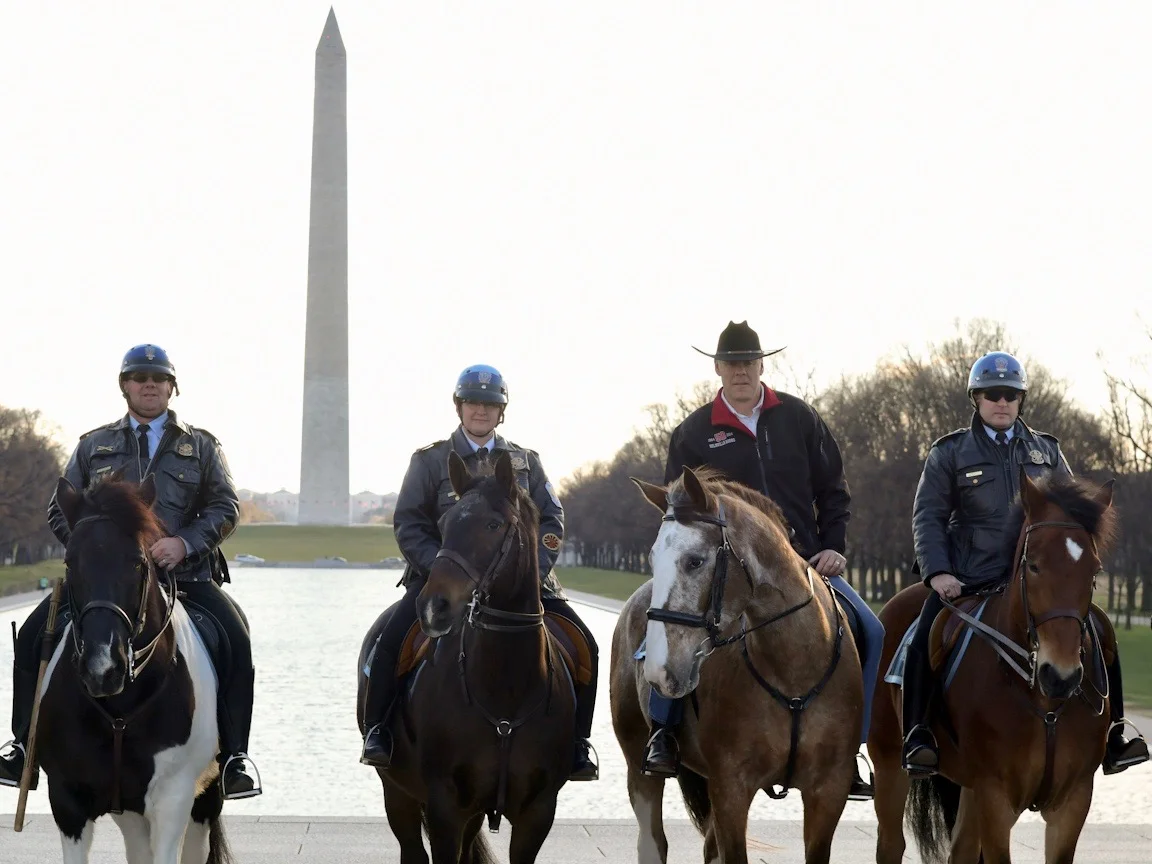
Zinke’s Disloyalty Purge Of Interior Is Un-American

ryanzinke030217.jpg

By Anthony Broadman

Secretary of the Interior Ryan Zinke said last week in a speech to oil industry representatives that “I got 30 percent of the crew that’s not loyal to the flag.”

He reportedly said Interior is a pirate ship that captures “a prized ship at sea and only the captain and the first mate row over.” 

His message was clear.  For Zinke, federal public service means loyalty to Donald Trump.  That kind of loyalty test and resulting purges of “disloyal” non-political public servants—often called “career staff”—are un-American.

It’s even worse against the backdrop of Zinke’s move-or-quit approach to remaking Interior and the BIA.  This summer, Zinke reassigned around 50 senior executive employees—over one-fifth of all senior executive employees at Interior.  If he didn’t want many of those 50 to quit, reassigning them all at once seems like a weird move.

The employees who are reassigned and targeted for disloyalty will of course personally bear the direct brunt of Zinke’s efforts.  But purge-panic and yet more political intrigue at the BIA won’t serve Tribes and Tribal members. 

Zinke’s reshuffling and termination of Interior employees might violate federal law; it would violate many state laws.  “If the First Amendment protects a public employee from discharge based on what he has said, it must also protect him from discharge based on what he believes.”  Branti v. Finkel, 445 U.S. 507, 515 (1980).  But an Inspector General investigation and employment lawsuits will decide that question. 

More importantly for Interior and its Bureau of Indian Affairs, testing political loyalty of employees charged with ministerial execution of federal law smacks of the kind of abusive patronage practices that civil service statutes sought to prevent.

Zinke says he wants “to increase employee morale and ensure those of you on the front lines have the right tools, right resources, and flexibility to make the decisions to allow you to do your job.” Purges of intellectuals and sending disloyal employees ‘down to the countryside’ won’t accomplish this.  Zinke’s latest loyalty comments only make his purge efforts look more like the Cultural Revolution reassigned employees suspect he is carrying out.

Anthony Broadman is a partner at Galanda Broadman PLLC.  He can be reached at 206.321.2672, anthony@galandabroadman.com, or via www.galandabroadman.com.

A Native American's Immigrant Song

BoNXd3YIAAAH_QR1.jpg
"We may be different in color or origin but we are connected in one way or another." -- Lower Elwha Klallam Chairwoman Frances Charles, Canoe Journey 2017

The Dreamer controversy got me thinking, about how we Natives are in fact more connected to immigrants than we might realize, or admit.  

So I wrote a "song" about it.  Here's my riff on it all:

First, I'm no fan of the barbs or memes that Indians are the only people who are not immigrants to the United States.  

That may have been true in 1492 but unless you're a full-blooded Indian---the overwhelming majority of us aren't---you descend from immigrants too.  

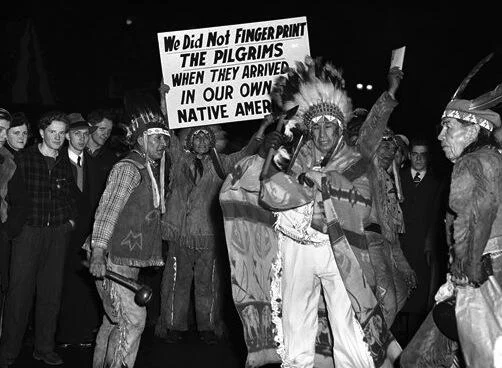
Speaking of 1492, there are oral accounts of Columbus' arrival to Haiti, wherein the "Indios" actually welcomed him and his people ashore. Indeed, as the image above suggests, America's Indigenous Peoples have generally been more inclusive of immigrants than we might believe.

So let's end all of the divisive rhetoric about "us" (Indians) versus "them" (immigrants).

Second, let's realize that birthright citizenship, as guaranteed by both the U.S. Constitution's 14th Amendment and 8 U.S.C. 1401, is a tie that binds certain undocumented persons---like so-called anchor babies---and Indians.  

Simply, if you are "a person born in the United States," you are a citizen of the United States.  8 U.S.C. 1401(a).  Anchor babies, i.e., born unto the land, are United States citizens even though their parents may be "unauthorized."  Id.

Likewise, if you are "a person born in the United States to a member of an Indian, Eskimo, Aleutian, or other aboriginal tribe," you are a citizen of the United States (8 U.S.C. 1401(b)). Indian babies, born unto the land, are also United States citizens under federal law (id.), and may also be a Tribal citizen under many Tribal laws like IRA constitutions that guarantee citizenship at birth.

Third, let's recognize that Indians also immigrate, from one tribal nation to another, through a process called relinquishment.  With tribal peoples having inter-married for generations, it is very common for an Indian to have ancestral ties to multiple tribal nations.

In this day and age, Indians are frequently relinquishing their citizenship with one tribal nation, and becoming a citizen of another.  Although this mode of immigration is often fueled by per capita dollars, it is nonetheless an Indian's prerogative to relinquish and enroll elsewhere.

Fourth, let's also appreciate the potential commonality between Dreamers and too many Indians. Dreamers are persons who were brought to America as children by undocumented parents or others. To many Dreamers, America is the only home they have ever known.

Many Indian children are born away from their Tribe's homelands---as the United States has intended since 1887---but "brought home" to their Tribe and enrolled by their parents or others. To those Indians, their Tribe is the only home they have ever known.  Now several of those Indians are being told, by "leaders" of their Tribe, that they don't belong; they are being disenrolled. 

President Trump threat to deport 800,000 Dreamers after ending DACA makes me think of those Indians.  Much like Autocrat #45, who stands poised to jettison Dreamers from their only home, tribal autocrats are today kicking out thousands and thousands of Indians from their only homes. 

Unconscionably, what President Trump proposes to do, and what as many as 80 tribal autocrats (or autocracies) have already done, is to separate children from their parents and families, and nuclear families from their extended families; and to displace them all from their homes.

We as Native people, knowing full well the traumatic effects of separation and displacement, should raise our voice against the injustice we are witnessing throughout the land. 

This is my immigration song.

Gabriel S. Galanda is the managing lawyer of Galanda Broadman, PLLC, in Seattle. Gabe is a descendant of the Nomlaki and Concow Tribes, belonging to the Round Valley Indian Tribes of Northern California.  He is also of Austrian, Scandinavian and Portugese descent.