The Violence Against Women Act (“VAWA”) and its protections for Native American women must be immediately sent to President Obama’s desk for signature. For sake of protecting all American women, including the First American women, the matter should not be delayed another day. The VAWA Reauthorization must be passed by Congress NOW. Thirty-five years ago, in Oliphant v. Suquamish Indian Tribe (1978), the Supreme Court stripped tribal governments of the power to prosecute non-Indians who enter Indian Country and commit violence against Indian women. A criminal jurisdictional void has existed in tribal communities ever since. Last April, the Senate passed S. 1925, a VAWA Reauthorization bill that would finally restore tribal criminal jurisdiction over the perpetrators of these attacks. The bill was passed with bipartisan support.
In May, however, the Republican-controlled House introduced its version of the VAWA, H.R. 4970, which omitted the Senate’s tribal provisions. On May 16, the House passed H.R. 4970, without including the tribal jurisdiction provisions. The bill passed strictly on party lines.
Since then, the VAWA reauthorization has lingered. And, apparently, it is not due to partisan politics at this time. This year’s elections saw women voters re-elect Barack Obama for a second term, send more women than ever before to Congress, and deliver a powerful message to the GOP that they need to do a better job of appealing to women.

On December 3rd, as a result of that American female mandate, Republican House Members Darrell Issa, Tom Cole, Mike Simpson, John Kline and Patrick McHenry changed their position on tribal jurisdiction over non-Indian abusers in Indian Country; they introduced H.R. 6625, a bill that includes the tribal jurisdiction provision, provided that a defendant can remove the case to federal court if he believes his rights have been violated by a tribal government.
On December 6th, Senate Judiciary Chairman Patrick Leahy confirmed that all issues have been resolved to get the VAWA reauthorization bill passed, except for the tribal jurisdiction provision. On December 11, ten House Republicans broke ranks to sign a letter urging House Speaker John Boehner and House Majority Leader Eric Cantor to take up and pass a bill including the provisions of S. 1925.
Just today, December 18, all twelve Democratic Senate women joined together to call on the women of the House Republican Conference to work with their leadership and finally pass a VAWA with tribal protections. The letter notes that S. 1925 “is widely supported by law enforcement officials, victims’ advocate groups, and the public at large.” Indeed, the letter goes on, “until now, this bill has been among the most broadly supported measures considered in both the House and Senate and has only become more so over time. . . . Support for the legislation’s renewal in 2000 [garnered] a 95-0 vote in the Senate, and a 371-1 vote in the House. And an even stronger consensus emerged in 2005, with unanimous approval in the Senate, and a 415-4 vote in the House.”
The letter then reminds House Republicans of the directive set by American women voters: “In 2013 and beyond, the women of the House and Senate are primed to play an even larger role in guiding national policy and we should do so by working across party lines. . . . All women should be protected and introducing into this legislation the notion that some women subject to violence deserve to be protected while others do not is something we believe we can all agree is unacceptable. We should not pick and choose which victims of abuse to help and which to ignore.”
Things are coming together for a VAWA reauthorization.
It appears that Rep. Cantor’s unwavering stance on the issue is all that stands in the way. According to the Huffington Post, Vice President Joe Biden, sponsor of the original 1994 VAWA, has been in meetings with Rep. Cantor to get a deal done. But “Cantor is refusing to accept any added protections for Native American women that would give expanded jurisdiction to tribes.” Rep. Cantor needs to stand down.
The 112th Congress will end on January 3, 2013. And unless the VAWA reauthorization bill is passed with the tribal provisions intact, there will be no VAWA reauthorization. According to the White House, the President will veto any VAWA reauthorization bill that does not include protections for Indian Country domestic violence victims.
The time is now for VAWA reauthorization. Native women cannot wait any longer. Please tell House Republicans to urge Rep. Cantor to allow a VAWA that includes tribal protections, here. Majority Leader Cantor can also be reached at 202.225.2815.
Ryan Dreveskracht is an Associate at Galanda Broadman PLLC, of Seattle, an American Indian majority-owned law firm. His practice focuses on representing businesses and tribal governments in public affairs, energy, gaming, taxation, and general economic development. His forthcoming work, “Congress' Treatment of The Violence Against Women Act: Adding Insult to Native Womens' Injury” will be published in the University of Miami Race and Social Justice Law Review. He can be reached at 206.909.3842 or ryan@galandabroadman.com.

 This honor follows several other recent honors for Galanda Broadman and its lawyers. Last month, Galanda Broadman recently received a prestigious Tier 1 ranking in the 2013 Edition of U.S. News - Best Lawyers “Best Law Firms,” in the arena of Native American Law. In addition, firm co-founder Gabe Galanda was named to The Best Lawyers in America in the practice areas of both Gaming Law and Native American Law, for the seventh straight year. Gabe was also recently named a "Difference Maker" by the American Bar Association.
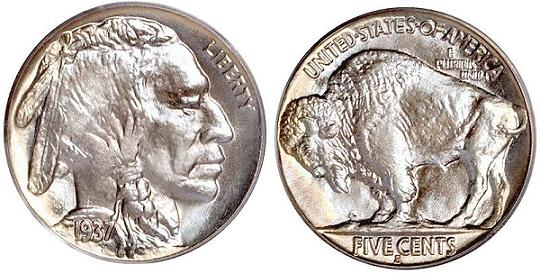 On the one side, at least according to some recent media depictions, it appears that tribal governments and their citizens are adamantly opposed to any energy development on their lands. All told, however, this couldn’t be further from the truth. Section A of this article will explain that tribes merely seek a seat at the table when decisions are made regarding developments that will adversely affect their lands or areas of cultural significance, and why this is important. Indeed, contrary to being opposed to alternative energy development, Tribes are very actively seeking to develop their lands, and to do so in a manner that is consistent with their cultures and traditions. But, large-scale alternative energy projects are virtually absent from Indian country. Thus, Section B of this article will discuss what is hindering these projects from coming to fruition. Finally, Section C of the article will discuss what Congress is – and is not – doing regarding the two sides of the coin.